
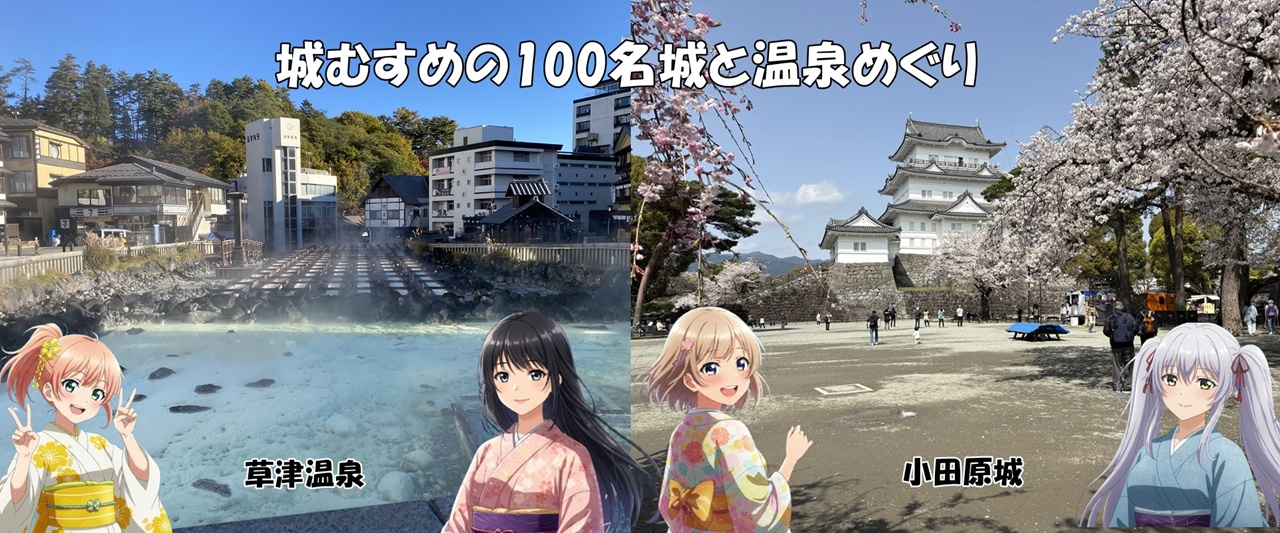

Hello! I'm Sakura Somei, your guide for Edo Castle. In this article, I’ll walk you through this legendary fortress and introduce some great sightseeing spots in the area. Let's dive into history! ♪

Edo Castle was the seat of power for the Tokugawa Shogunate and served as the epicenter of Japanese politics and culture for over 250 years. Today, the East Garden and Outer Garden of the Imperial Palace are open to the public, where you can still find countless historic ruins scattered across the vast grounds!
Basic Information
Edo Castle’s history began in the Muromachi period when it was first built by the legendary warrior Ota Dokan. However, its true transformation occurred when Tokugawa Ieyasu established his shogunate. He reconstructed it into a massive seat of government that would define the era.
For over 260 years, the castle served as the permanent residence of the Tokugawa Shoguns. It grew into a colossal "castle city," acting as the vibrant heart of Japan where samurai from across the nation converged.
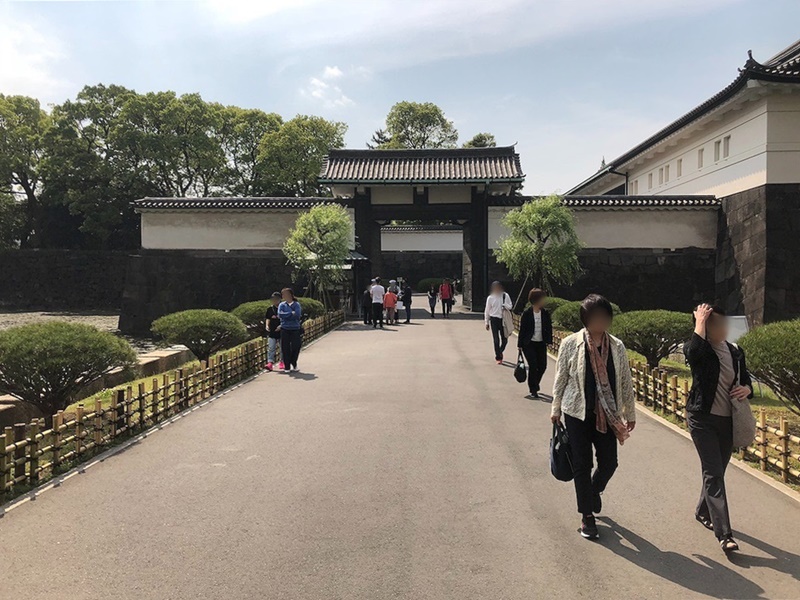
Today, the site is preserved as the Imperial Palace East Garden and the Outer Garden. Visitors can still marvel at historic structures like the Ote-mon Gate, the Hyakunin Bansho (Guardhouse), the Fujimi Yagura turret, and the foundation of the former Main Keep (Tenshu-dai).
The awe-inspiring stone walls and sprawling moats remain as silent witnesses to the absolute authority and architectural brilliance of the Tokugawa Shogunate.
| Item | Description |
|---|---|
| Location | 1-1 Chiyoda, Chiyoda-ku, Tokyo (Imperial Palace East Garden) |
| Year Built | 1457 (Choroku Era) |
| Founder | Ota Dokan / Tokugawa Ieyasu (Early Modern Renovation) |
| Main Lords | The Tokugawa Shogunate |
| Castle Type | Hirayama-jyo (Sprawling Castle City type) |
| Surviving Ruins | Ote-mon Gate, Fujimi Yagura, Tenshu-dai, Stone Walls, Hyakunin Bansho, Ninomaru Garden, Ooku ruins, etc. |
| Historic Status | National Special Historic Site (Edo Castle Ruins) |
| Management | Imperial Household Agency / Ministry of the Environment / Tokyo Metro Govt. |
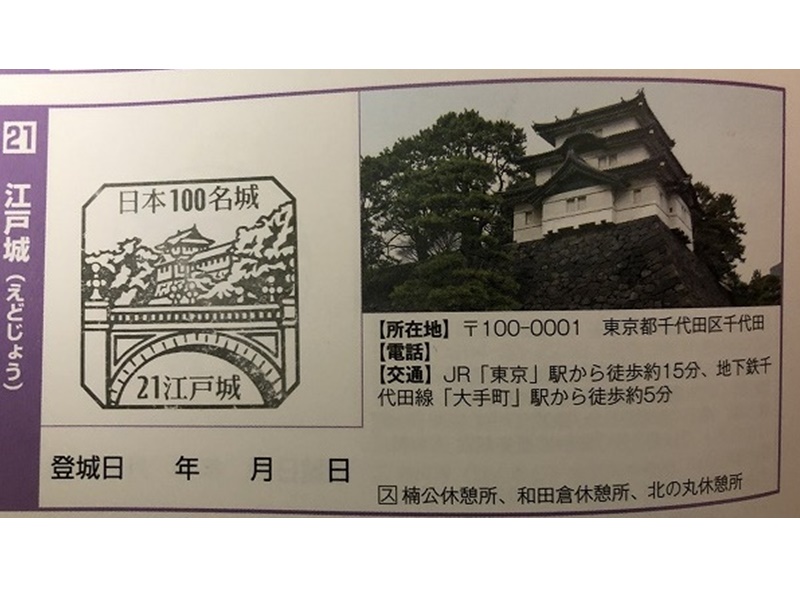
Edo Castle is #21 on Japan's Top 100 Castles list. It’s within walking distance from Tokyo Station—an incredible piece of history right in the modern heart of Japan! ♪
About the Castle
Edo Castle, located in the heart of Chiyoda, Tokyo, is a quintessential "hirayama-jyo" (hilltop castle) strategically situated on the eastern edge of the Kojimachi Plateau. It was designed to be the ultimate fortress for a unified Japan.
The original **Main Keep (Tenshu)** was a magnificent five-story structure standing approximately 60 meters tall—making it the largest ever built in Japanese history. Although it was reconstructed three times, it was tragically lost in the **Great Fire of Meireki in 1657**. Remarkably, it was never rebuilt, as the Shogunate prioritized the city's reconstruction over its own symbol of power.
The site is a treasure trove of historical drama. You can stand on the very spots where legendary events unfolded, such as the "Great Corridor of Pines" (famous from the 47 Ronin story), the ruins of the Ooku (the secluded Inner Palace for the Shogun's family), and the iconic Sakurada-mon Gate. It’s a place where history feels vividly alive.
Edo Castle is also affectionately known as Chiyoda Castle. This massive fortress was the ultimate symbol of the Tokugawa Shoguns' prestige—a true castle of the supreme rulers of Japan!
Walking Around Edo Castle
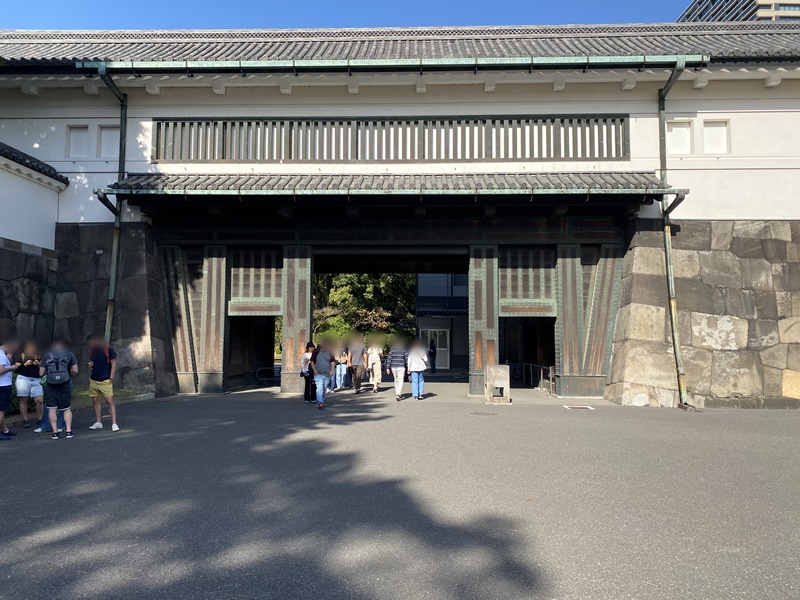
Edo Castle serves as the modern-day Imperial Palace, with two main areas open to the public: the Imperial Palace Outer Garden (Kokyo Gaien) and the Imperial Palace East Garden (Kokyo Higashi Gyoen). For this visit, I entered the East Garden through the Ote-mon Gate, the former main entrance. While admission is free, there is a mandatory baggage inspection at the gate. This slight security check adds a unique sense of solemnity befitting the home of the Emperor.
Once through security, the sheer scale of the Ote-mon Gate is breathtaking. Standing close to the thick, reinforced wooden doors, you can truly feel the fortress's impregnable design.
At the reception desk just inside, you'll receive an entry card. Make sure to keep it safe, as you’ll need to return it when you exit the gardens.
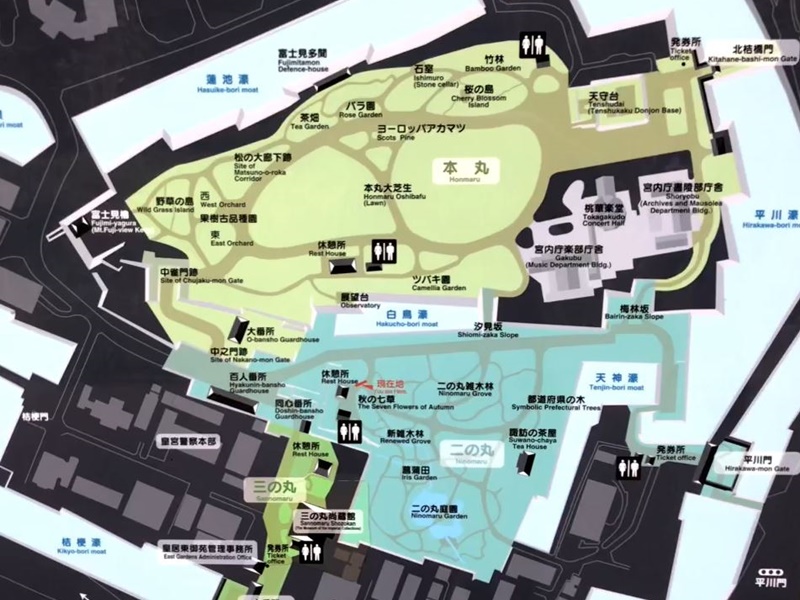
The grounds are incredibly vast, but keep in mind that not every area is open to the public. You’ll see Imperial Guard officers stationed near restricted zones and clear signage marking the path. To preserve these historic ruins and the quiet atmosphere, please stick to the designated routes and enjoy your stroll respectfully.
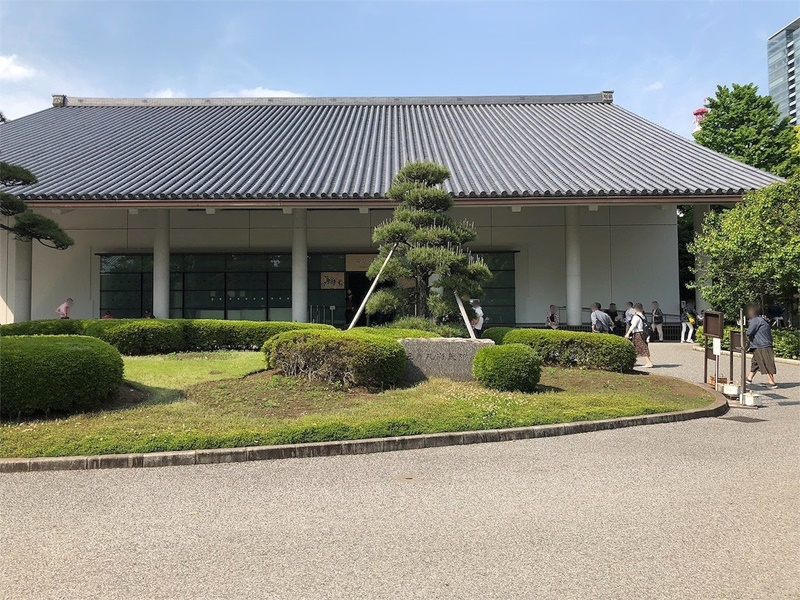
This is the Sannomaru Shozokan (The Museum of the Imperial Collections). Admission is free, and the rotating exhibits allow you to see precious treasures belonging to the Imperial Family. It's a wonderful cultural stop early in your walk.
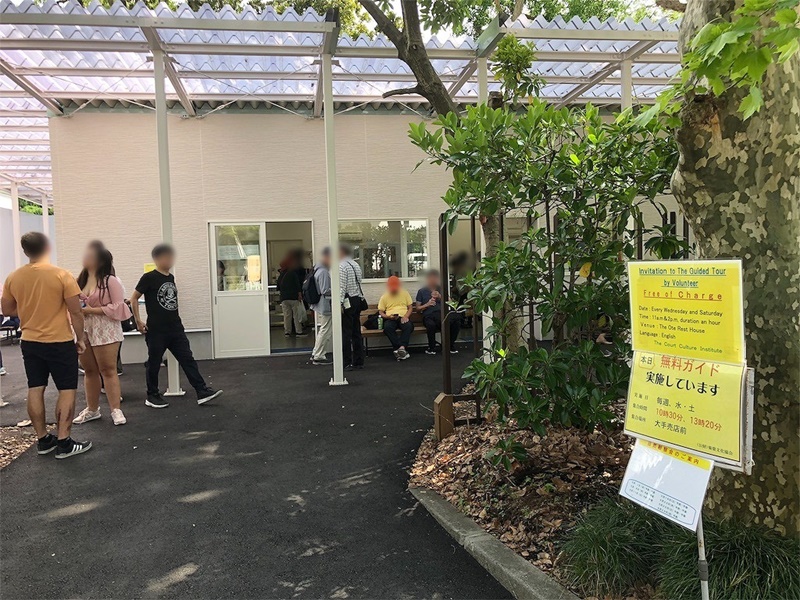
Opposite the museum is a rest area and a gift shop filled with unique souvenirs. This is also where you’ll find the official Top 100 Castles Stamp. While there are other stamp locations outside the East Garden, there's something satisfying about getting it right here within the castle walls!
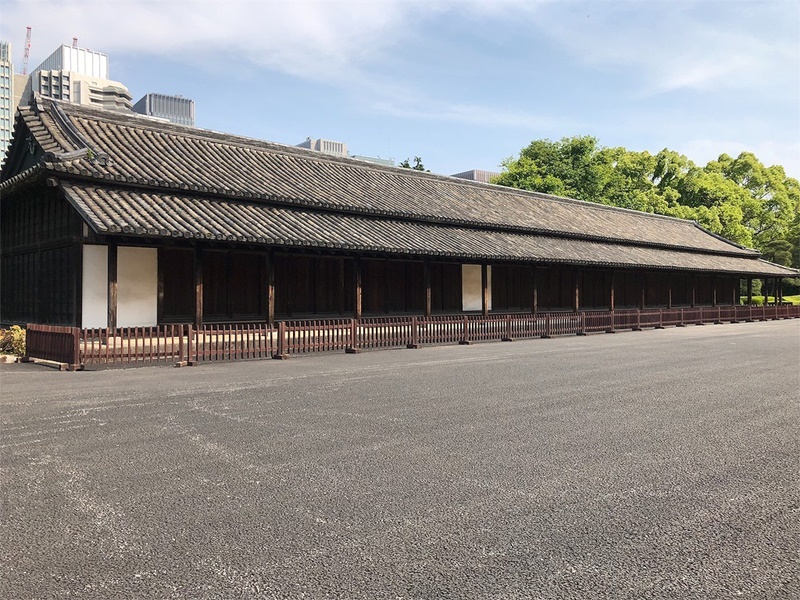
The Hyakunin Bansho (Hundred-Man Guardhouse). To reach the Honmaru (Main Bailey), visitors had to pass through three major guard stations: the Doshin-bansho, the Hyakunin-bansho, and the Dai-bansho.
This long, barracks-style building is massive—living up to its name, it was once permanently manned by a rotation of 100 elite guards. Looking at the long veranda, I imagined the guards sitting there, sipping tea while discussing the latest news from the Shogunate.
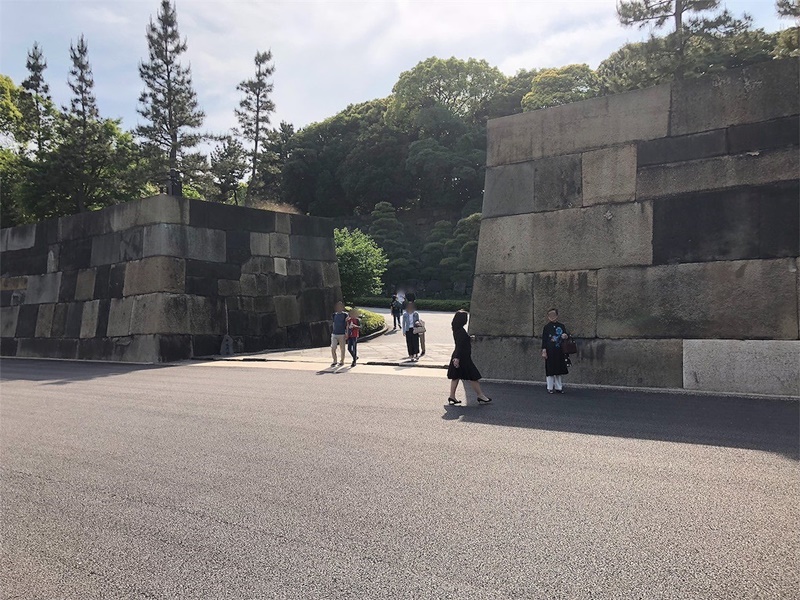
The Naka-no-mon (Middle Gate) Ruins. The stonework here is exceptional. It’s hard to believe these massive stones were stacked with such precision without the help of modern machinery! Just past these ruins is the Dai-bansho (Great Guardhouse), the most prestigious of the security posts, manned by higher-ranking samurai. While the Hyakunin-bansho is larger, the Dai-bansho possesses a distinct air of authority.
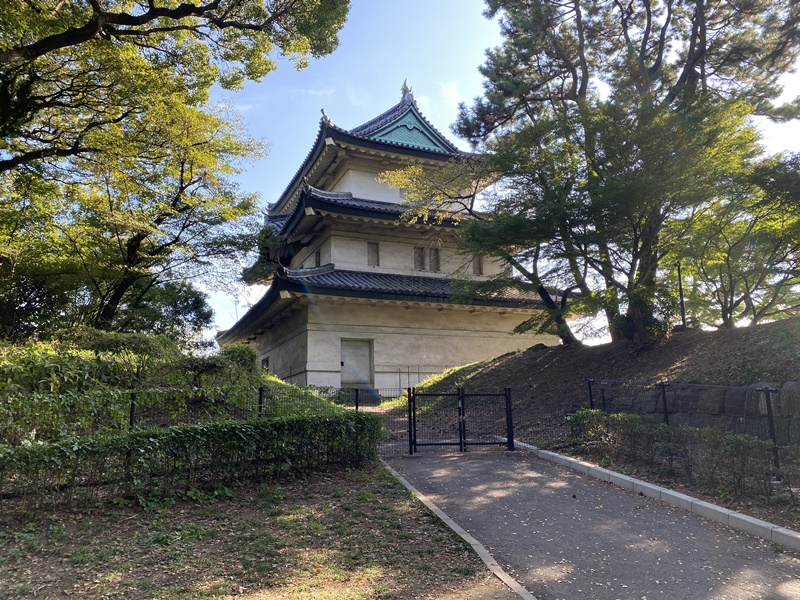
The Fujimi Yagura (Mount Fuji View Turret). During the Edo period, one could reportedly see Mt. Fuji clearly from this vantage point. After the Great Fire of 1657 destroyed the main keep, this elegant three-story turret served as its functional substitute.
The ancient, towering trees near the turret add to its dignified silhouette. The East Garden is surprisingly lush; you’ll find bamboo groves and even an orchard recreating Edo-period fruit varieties. It’s a literal urban oasis that attracts many repeat visitors seeking a moment of natural tranquility.
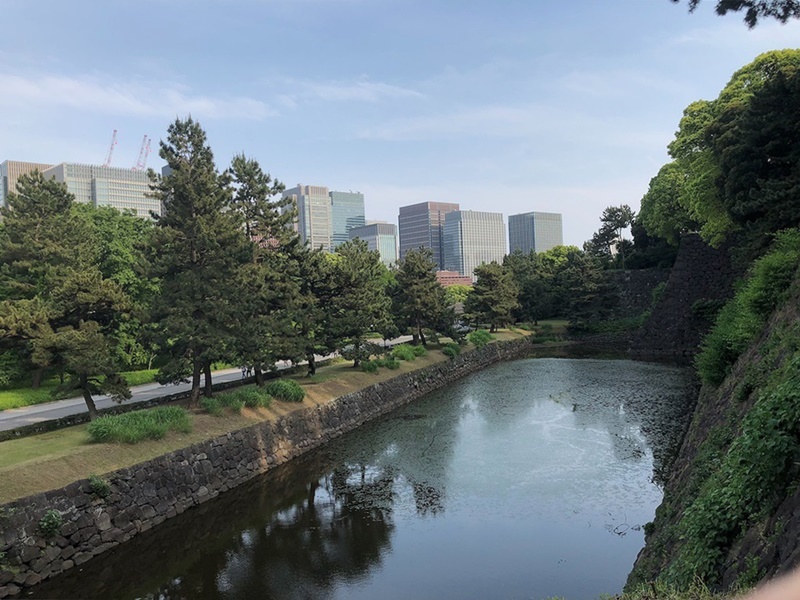
Shiomizaka (Tide-view Slope). Its name comes from the fact that the sea was once visible from here. Today, you see the skyscrapers of Tokyo's financial district—a fascinating visual "time-warp" between the ancient slope and the modern city. The slope is quite steep, so please watch your step!
Halfway between the slope and the Ninomaru Garden, there is another rest station with vending machines and seating—perfect for catching your breath during the long walk across the castle grounds.
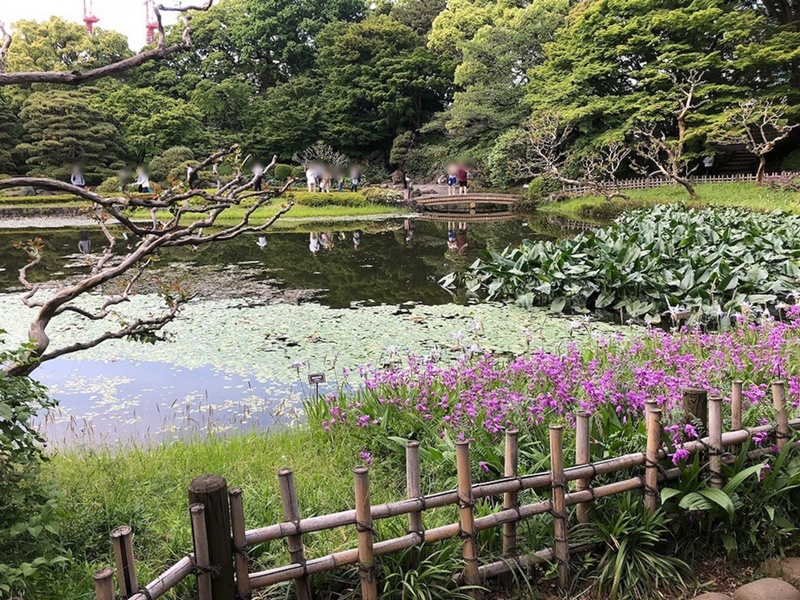
Leaving the woods and entering the Ninomaru Garden is like a breath of fresh air as the view suddenly opens up. This is a stunning Chisen-kaiyu-shiki (pond-strolling) garden.
With its vibrant Nishikigoi (colored carp) swimming elegantly in the pond and the gentle sound of a small waterfall, every angle of this garden is a masterpiece. It was reconstructed based on a plan from the time of the 9th Shogun, Tokugawa Ieshige. The sheer level of detail makes it easy to forget you are in the middle of a global metropolis.
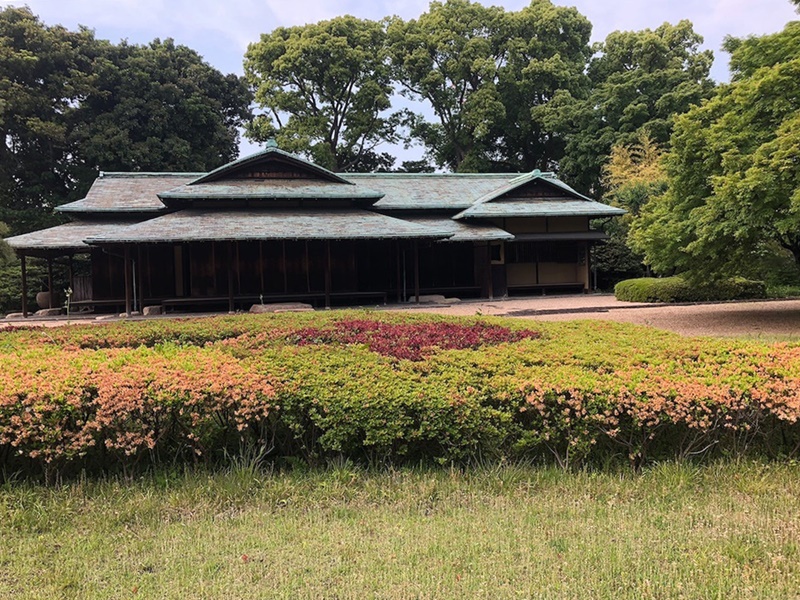
The Suwa-no-Chaya Teahouse. While you cannot enter the building, the view from the path is lovely. From certain angles, the surrounding skyscrapers are hidden by trees, giving you a glimpse of what the Shoguns might have seen centuries ago.
Nearby, there is a fascinating path lined with Official Trees representing each of Japan's 47 prefectures. It's a fun game to find the tree from a region you've visited!
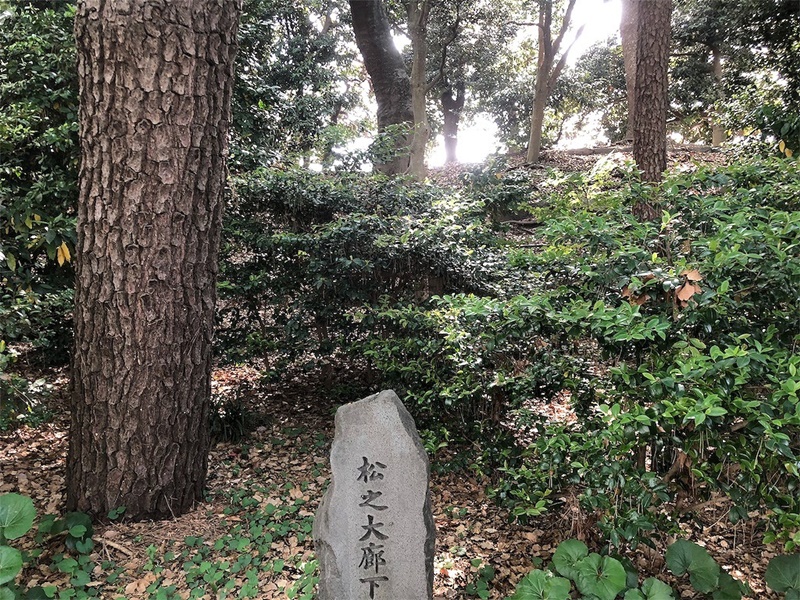
The Matsu-no-Dairoka (Great Corridor of Pines) ruins. This is the infamous site of the assault by Lord Asano on Lord Kira—the incident that triggered the legendary "47 Ronin" (Chushingura) saga. While the building is gone, standing on this quiet, tree-lined spot makes you realize just how close the incident happened to the Shogun's private quarters. It must have been a massive scandal at the time!
Nearby is the Fujimi Tamon defense house. It once served as an armory and lookout. Today, it is open to the public, allowing you to see the robust interior structure of an Edo-period military building.
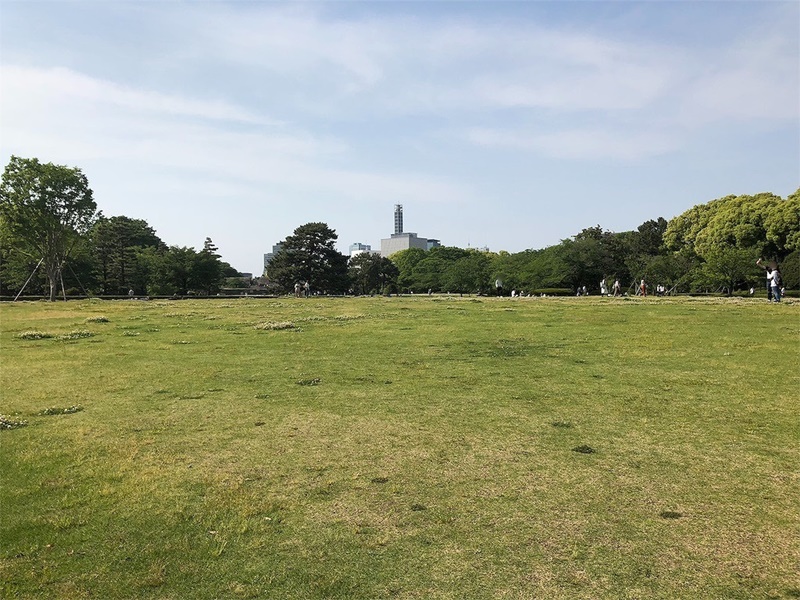
The Honmaru Plaza. This massive, open lawn area marks where the main palace once stood. It’s hard to imagine that this peaceful field, where people now enjoy picnics and quiet reading, was once the most guarded political nerve center of Japan.
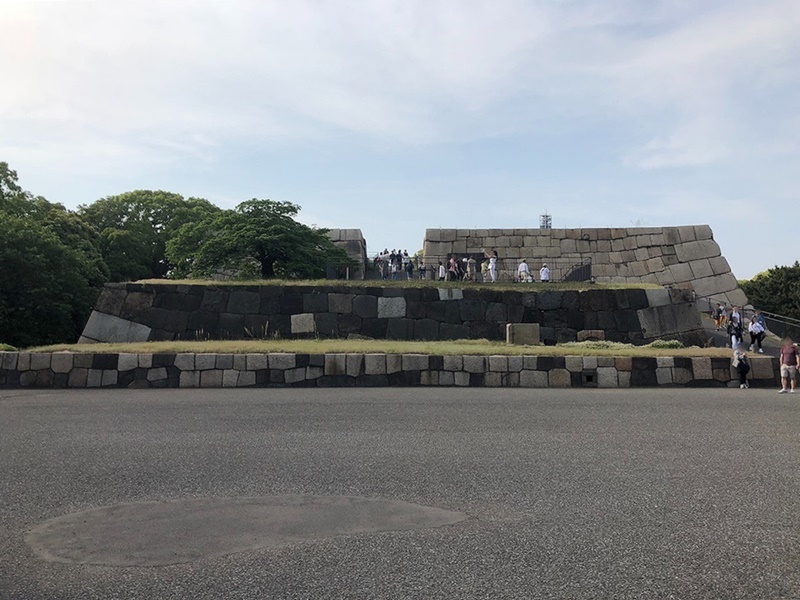
The Tenshu-dai (Main Keep Foundation). The sheer size of this stone base tells you exactly how colossal the original keep must have been! You can walk up to the top of the foundation to get a panoramic view of the entire Honmaru grounds.
There are maps and compass roses at the top to help you orient yourself with the modern city. While there have been many discussions about rebuilding the keep, there are currently no official plans. For now, we have to use our imaginations to picture the 60-meter tower that once dominated the Tokyo skyline.
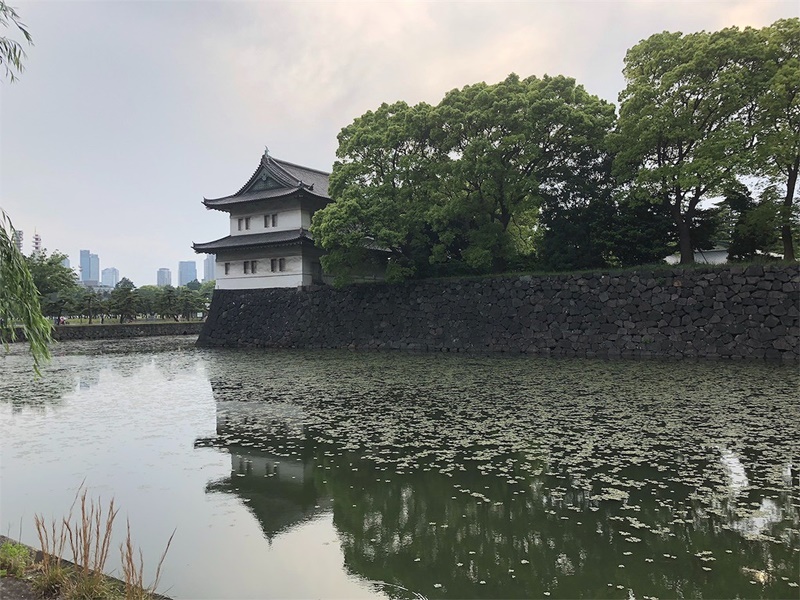
The water moats surrounding the castle are equally impressive in their scale. To see the final iconic spots, we leave the East Garden and head toward the Imperial Palace Outer Garden (Kokyo Gaien). Note that the walk from Ote-mon to Nijubashi is quite long!
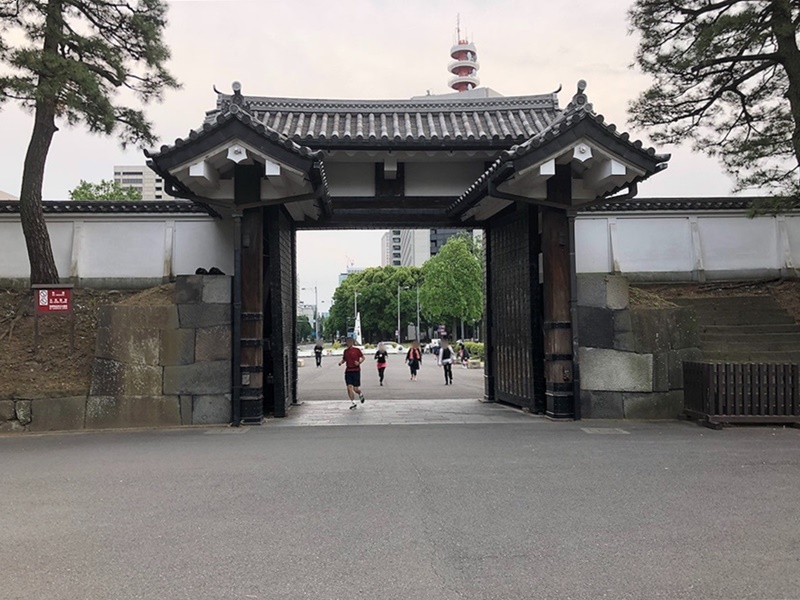
The Sakurada-mon Gate. This is the site of the famous Sakuradamon Incident, where the Shogunate official Ii Naosuke was assassinated. Today, the gate is a favorite landmark for city joggers. The current structure is a beautiful reconstruction that is designated as a National Important Cultural Property.
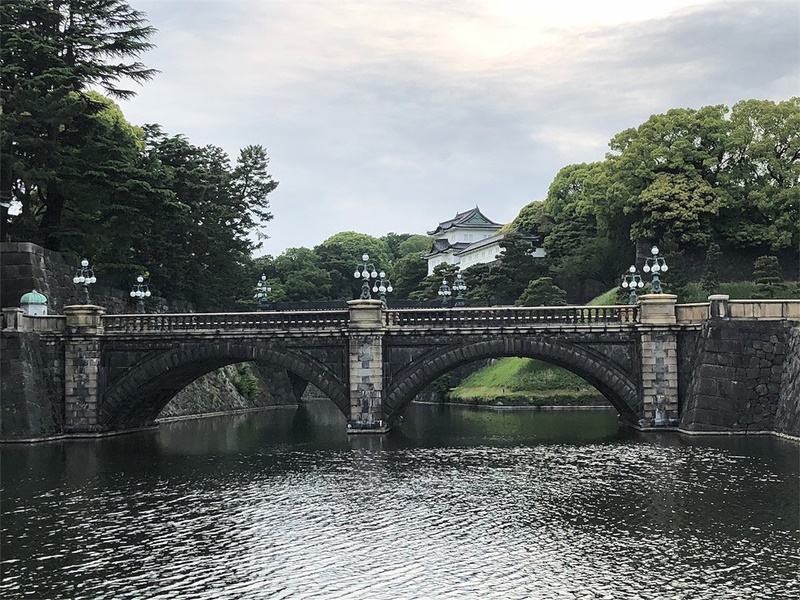
Nijubashi Bridge. While the stone bridge in the foreground is often mistaken for Nijubashi, the "true" Nijubashi is the steel bridge located further behind it. This is arguably the most famous postcard view of Edo Castle and is always buzzing with tourists taking photos. It truly is a sight that defines the majestic beauty of Japan.
Keep in mind that Nijubashi and Sakurada-mon are in the Outer Garden, not the East Garden! Nijubashi is such an iconic symbol—you've likely seen it in calendars or on the news. It’s truly one of Japan’s most representative landscapes!
Exploring the Surrounding Area
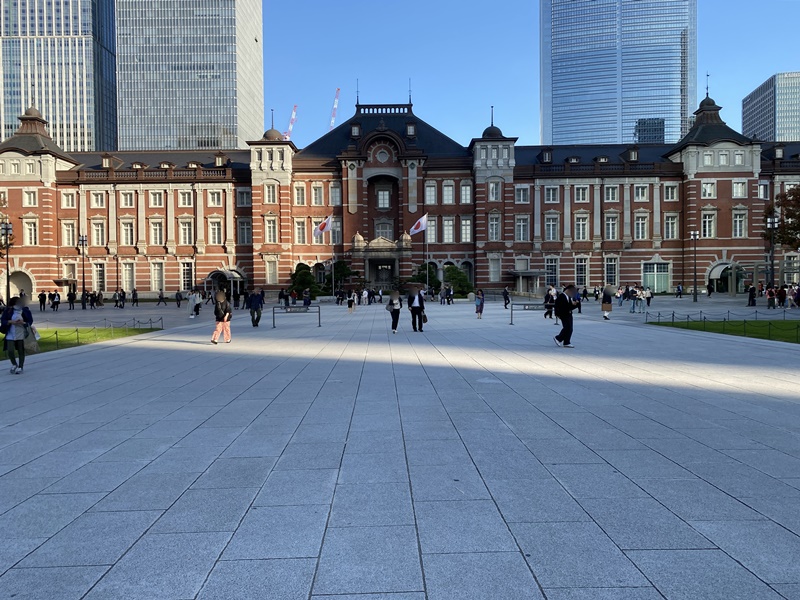
Welcome to Tokyo Station! This iconic view is a staple of Japanese media and represents the grand gateway to the capital. The beautiful red-brick station building is an architectural masterpiece, blending Renaissance and Baroque styles into a majestic landmark.
The station itself is a major tourist destination. On the day of my visit, it was bustling with people capturing photos with the historic facade as their backdrop.
Inside the station complex, you'll find a massive array of restaurants and souvenir shops, making it a perfect hub for both world-class dining and shopping.
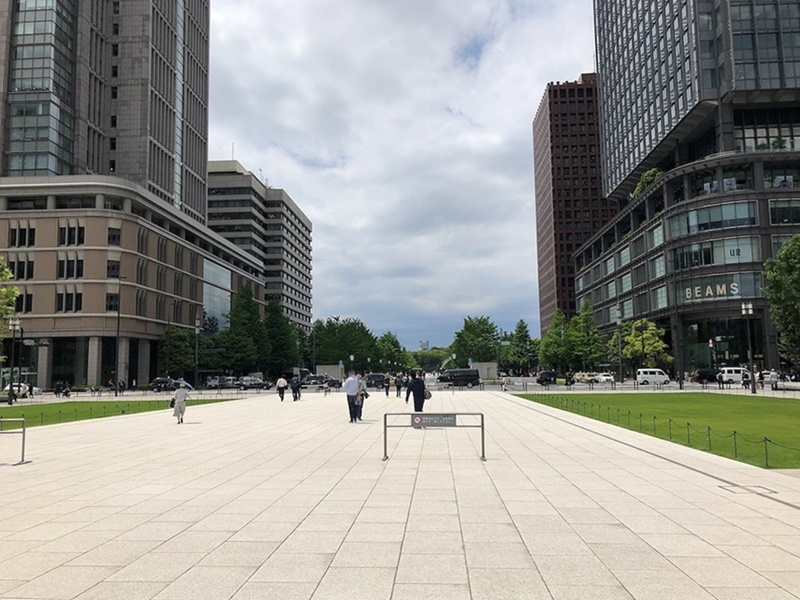
This is the view looking straight out from the station's main exit. If you walk directly ahead, you’ll reach Edo Castle. The surrounding Marunouchi district is lined with chic shops and upscale buildings like the Maru Building, offering a sophisticated urban atmosphere.
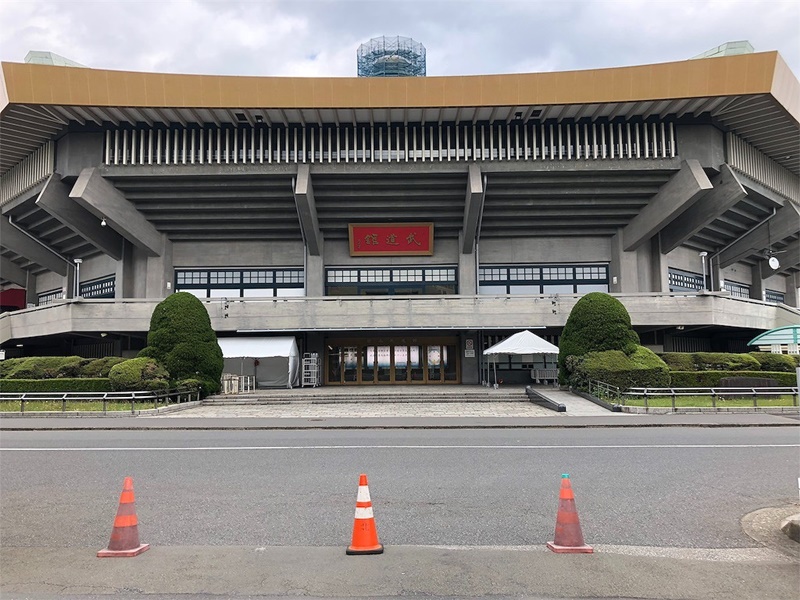
Next up is the legendary Nippon Budokan. Located within Kitanomaru Park, this octagonal hall is famous worldwide for martial arts and massive concerts. Even when there isn't a scheduled event, the architecture is worth a look. The park also houses the Science Museum and other cultural facilities.
I took a short break at a shop in front of the Budokan, where I found an interesting information booth about Kitanomaru Park. They had several colorful displays, but the one about wild birds caught my eye—it turns out this park is a fantastic spot for birdwatching right in the city center!
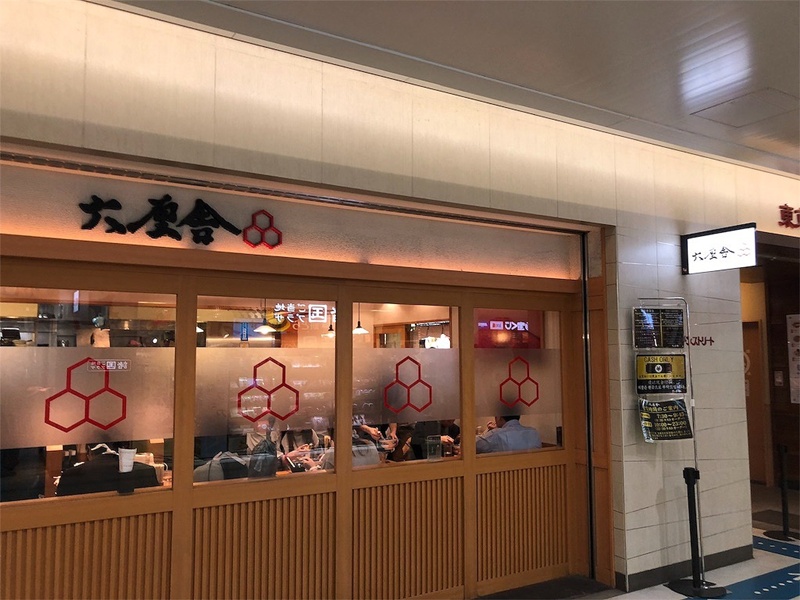
Time for some food! I headed to Rokurinsha, located within the famous "Tokyo Ramen Street" inside Tokyo Station.
At Rokurinsha, you purchase your ticket from the machine before joining the queue. Even during the mid-afternoon on a weekday, there was a line, which is standard for this popular spot. Luckily, I was seated within about 10 to 15 minutes.
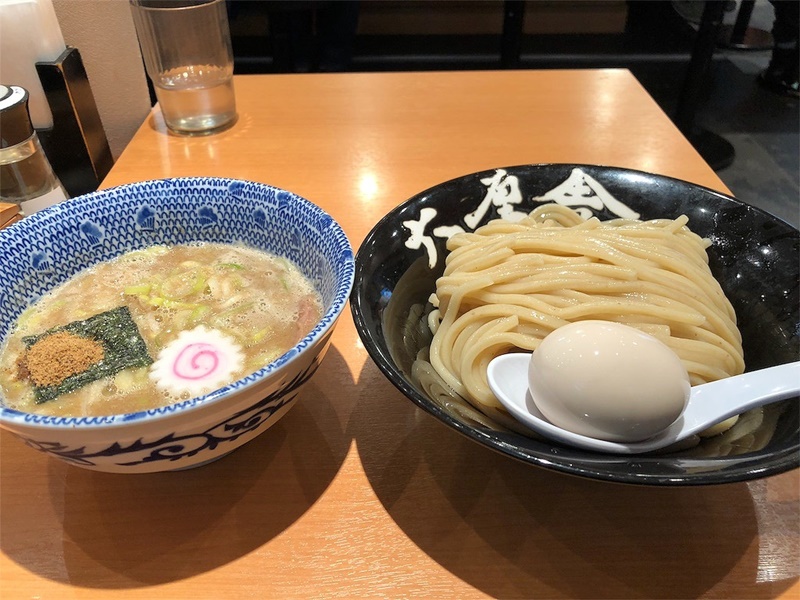
This is their signature Tsukemen (Dipping Noodles). It features extra-thick straight noodles paired with a rich, velvety pork-and-seafood-based broth (Tonkotsu-Gyokai).
The dipping sauce is packed with green onions, nori, a naruto fish cake, and a pile of savory fish powder. Mixing that powder into the soup unleashes a massive punch of umami. The noodles are delightfully chewy and hearty, and the marinated soft-boiled egg (Ajitama) was perfectly runny.
Pro Tip: After finishing your noodles, you can ask for a "soup-wari" to dilute the remaining sauce with a lighter broth, turning it into a delicious soup to drink!
The way the thick noodles cling to the rich broth is pure bliss. It’s easy to see why people are willing to wait in line for this! If you love seafood-based ramen, this is an absolute must-visit.
| Item | Details |
|---|---|
| Name | Rokurinsha (Tokyo Station Branch) |
| Price | Special Tsukemen: Approx. 1,150 yen (as of 2024) |
| Location | Tokyo Ramen Street, B1F Marunouchi, Chiyoda-ku |
| Access | Inside the ticket gates of JR Tokyo Station (Yaesu South Exit side) |
| Phone | 03-3286-0166 |
| Highlights | A legendary spot for rich Tonkotsu-Gyokai dipping noodles with satisfyingly thick noodles. |
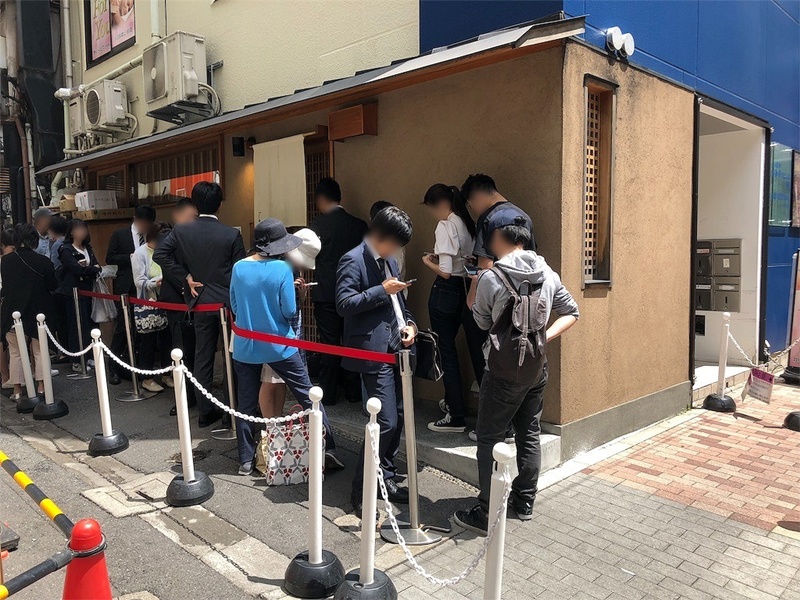
Next is Tsujihan. While located just outside the station complex, this seafood bowl (Kaisendon) specialist is incredibly famous. Even on a weekday, the line was long—expecting a wait here is practically a rule!
The menu is focused solely on their signature "Zeitaku-don" (Luxurious Bowl), categorized by different levels of toppings (Ume, Take, Matsu). You can also add extra toppings like sea urchin (uni) to your order.
While waiting in line, a staff member took my order, and I went with the "Take" (Bamboo) level. It seemed like the "Ume" (Plum) was the most popular choice among the crowd.
The interior is a minimalist, quiet counter-only space that feels very focused and traditional.
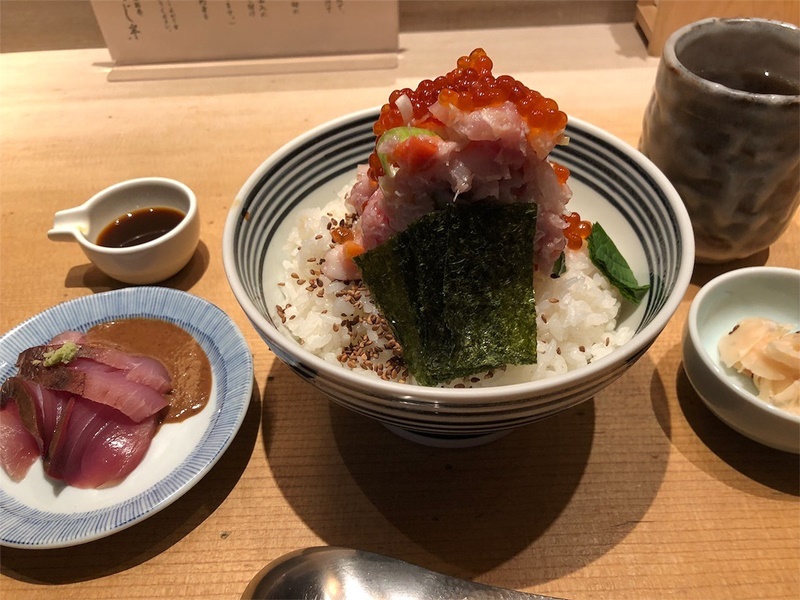
Behold the Zeitaku-don (Take)! The visual impact is incredible. It’s a mountain of about eight different types of seafood, centered around finely minced tuna (negitoro).
After you’ve enjoyed most of the bowl, leave a few bites of rice and ask the chef for "Tai-dashi" (Sea Bream Broth). They will fill your bowl with a rich, hot broth. You can even ask for a free rice refill at this stage if you're still hungry!
The transformation from a fresh seafood bowl to a warm, savory Dashi-chazuke is magical. It truly is a meal you can enjoy twice in one sitting!
| Item | Details |
|---|---|
| Name | Nihonbashi Kaisendon Tsujihan (Tokyo Station Branch) |
| Price | Zeitaku-don (Ume): From 1,280 yen (as of 2024) |
| Location | B1F Gransta Tokyo, 1-9-1 Marunouchi, Chiyoda-ku |
| Access | Inside JR Tokyo Station (Near Yaesu Underground Central Gate) |
| Phone | 03-6268-0024 |
| Highlights | A magnificent seafood bowl that transforms into a savory sea bream broth risotto halfway through. A must-try Tokyo experience. |

There's so much delicious food around Tokyo Station that I definitely overate! But every single bite was totally worth it! ☆
Top 100 Castles Stamp & Access Info
| Item | Details |
|---|---|
| Locations | 1. Nanko Rest House 2. Wadakura Rest House 3. Kitanomaru Rest House |
| Hours | 1. Nanko Rest House: 8:30 AM – 5:00 PM 2. Wadakura / 3. Kitanomaru: 9:00 AM – 5:00 PM |
| Closed | Irregular (Varies by facility) |
| Phone | 03-3213-0095 (Kokyo Gaien Management Office) |
| Fee | The rest houses are free to enter. |
| Notes | The stamp is available at all three locations mentioned above. |
| Item | Details |
|---|---|
| Address | 1-1 Chiyoda, Chiyoda-ku, Tokyo (Imperial Palace / East Garden Area) |
| By Train | Approx. 5-min walk from JR "Tokyo Station" (Marunouchi Exit) or Tokyo Metro "Otemachi Station." |
| By Bus | Numerous city and tour bus routes available. However, the subway and walking combo is the most efficient. |
| Parking | No general parking within the palace grounds. Please use nearby paid public parking lots. |
| Phone | Imperial Palace East Garden Management Office (Main Inquiry) |
| Walk Time | Approx. 30–60 mins for a quick visit. Allow 1–2 hours if exploring the East Garden and Nijubashi area. |

Edo Castle is right in the heart of Tokyo and the paths are mostly flat, so you don't need to worry about a dress code. However, the grounds are incredibly vast, so I strongly recommend wearing comfortable walking shoes!
Summary
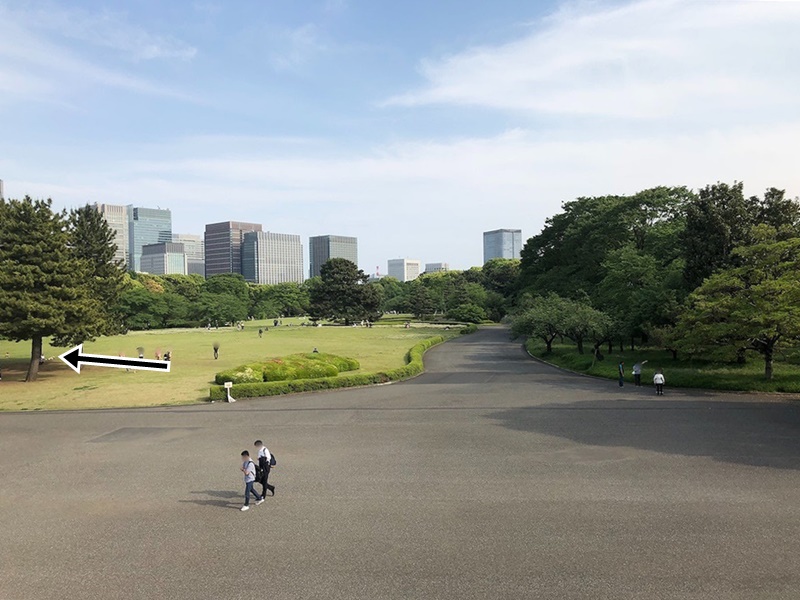
The photo above shows the view of the Honmaru Plaza from the top of the Tenshu-dai (Keep Foundation). According to maps inside the grounds, the infamous Ooku (Inner Palace) was located around the cluster of trees in the distance. While there isn't a specific signpost marking the exact spot, standing here allows you to visualize where the most private and mysterious part of the Shogun's residence once stood.
The Ooku is one of the most intriguing parts of Edo Castle's history—a secluded world for the Shogun's family that has inspired countless dramas and stories.
That concludes our tour of Edo Castle! As the largest castle ever built in Japan, it is incredibly rewarding but also physically demanding to explore. From the massive stone walls of the Honmaru to the serene Ninomaru Garden and the iconic Nijubashi Bridge, there is so much to see. I highly recommend taking plenty of breaks at the rest houses along the way.
The surrounding area is also a top-tier sightseeing hub. Tokyo Station itself is an architectural marvel, and the Marunouchi district offers world-class dining and shopping. If you're visiting Tokyo, Edo Castle is an absolute must-see that perfectly bridges the city's samurai past with its high-tech present.
Edo Castle still possesses such an incredible sense of scale and dignity. I hope that one day the Main Keep is reconstructed—I’d love to see the modern Tokyo skyline from its highest point! ♪
If they ever rebuild the keep, we’re definitely coming back! From the Great Corridor of Pines to the Sakurada-mon and the Ooku, Edo Castle is a treasure trove of dramatic stories. It truly feels like the castle of the ultimate rulers!
You can really feel that this was the center of Japan. And the food nearby is unbeatable! I got so overwhelmed by all the choices at Tokyo Station that I ended up buying two different lunch boxes (Ekiben)! ☆
Hehe, that’s so typical of you, Momiji. But honestly, I bought way too many Tokyo Banana sponges and other souvenirs myself! (laughs) For me, the Nijubashi Bridge was the standout—it has such an elegant, regal vibe that really stuck with me.
It truly was a fantastic day filled with history and fun! The neighboring castles on the 100 Castles list are No. 20 Sakura Castle and No. 22 Hachioji Castle. Please visit them if you have the time! ♪
▼ Explore Castles in Kanto & Koshinetsu
Kanto Area
14. Mito Castle /
15. Ashikaga Residence /
16. Minowa Castle /
17. Kanayama Castle /
18. Hachigata Castle /
19. Kawagoe Castle /
20. Sakura Castle /
21. Edo Castle /
22. Hachioji Castle /
23. Odawara Castle /
Koshinetsu Area
24. Takeda Residence /
25. Kofu Castle /
26. Matsushiro Castle /
27. Ueda Castle /
28. Komoro Castle /
29. Matsumoto Castle /
30. Takato Castle /
31. Shibata Castle /
32. Kasugayama Castle


