

Hello! I'm Sakura, the Castle Maiden. Today, I'll be your guide to Minowa Castle! I'll also introduce some great sightseeing spots in the surrounding area. Let's explore together! ♪

Minowa Castle is a famous Sengoku (Warring States) period fortress built on hilly terrain. It was the stage for fierce battles over the supremacy of the Kanto region! Even today, you can explore its massive earthen defense structures and see exactly what made it such an impregnable stronghold!
Basic Information
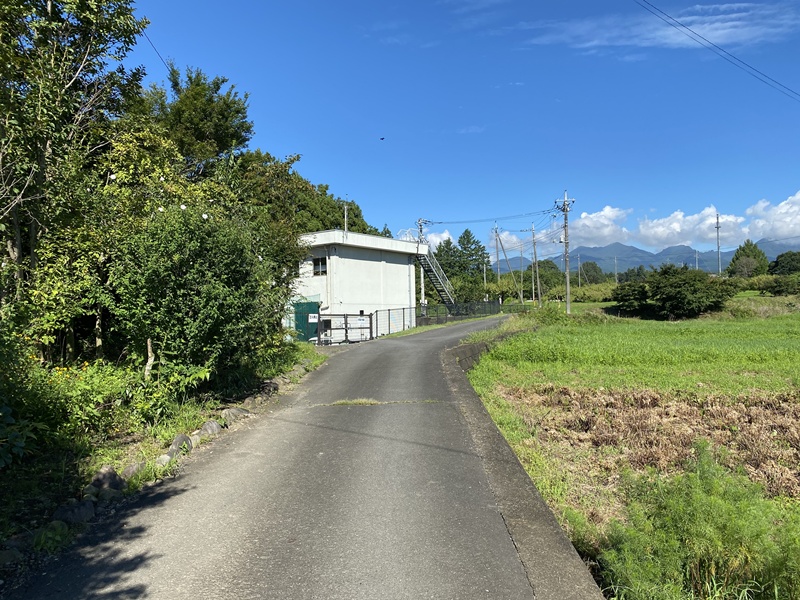
Minowa Castle is a "yamajiro" (mountain castle) originally built during the Sengoku period by Nagano Narinao. Later, under the rule of Nagano Narimasa, the castle was massively expanded and fortified, earning a fearsome reputation as one of the most impenetrable fortresses in the Kanto region.
Following the fall of the Nagano clan, the castle was taken over by the legendary warlord Takeda Shingen, who appointed his trusted general—one of the "Four Heavenly Kings of the Takeda," Naito Masatoyo—as its lord. Later, it fell under the control of Tokugawa Ieyasu's retainers. Having changed hands multiple times during the turbulent Warring States period, the castle holds a deeply dramatic history. Today, visitors can still explore its rugged mountain fortress terrain, impressive earthwork ruins, and beautifully reconstructed gates.
| Era | Event | Lord / Key Figure |
|---|---|---|
| Around 1512 | Nagano Narinao built the castle. | Nagano Narinao (Founder) |
| 1530s onwards | Massively fortified by Nagano Narimasa; became famous as an impregnable stronghold. | Nagano Narimasa (Great General) |
| 1566 | Conquered by Takeda Shingen; Naito Masatoyo was appointed as lord. | Naito Masatoyo (Takeda Retainer) |
| 1590 | Fell under the control of Tokugawa Ieyasu's retainers. | Ii Naomasa, etc. |
| Early Edo Period | Castle abandoned | ― |
Minowa Castle is proudly selected as No. 16 on Japan's Top 100 Castles list! During the Sengoku period, it served as an absolutely crucial stronghold in the fierce struggle for supremacy over the Kanto region! ♪
About the Castle
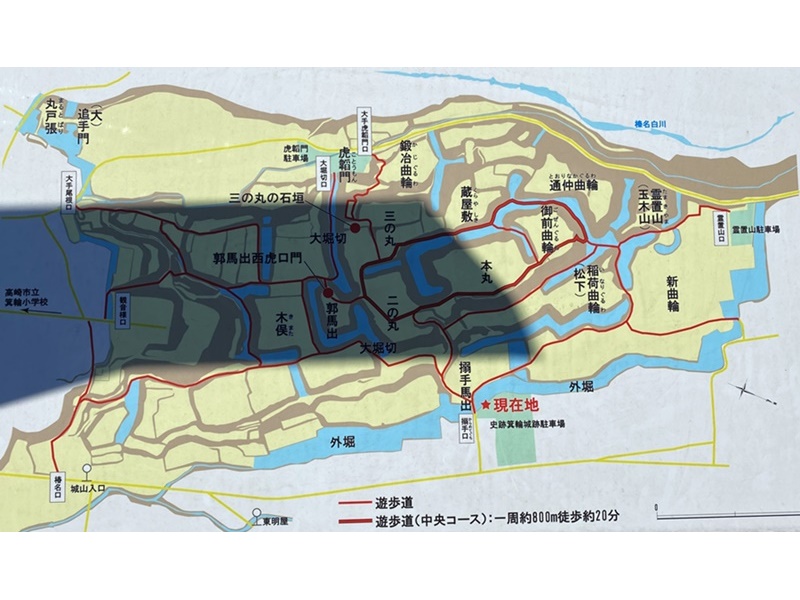
Minowa Castle is a "hirayama-jyo" (hilltop castle) located in Takasaki City, Gunma Prefecture. It stands as a prime example of a Sengoku-period mountain fortress, ingeniously constructed to take full advantage of the natural hilly terrain.
The castle was built by Nagano Narinao and his son, Narimasa. During Narimasa's reign, it earned a fearsome reputation as one of the most impenetrable fortresses in the Kanto region. Hailed as the "Great General of Joshu (Gunma)," Narimasa famously clashed with legendary warlords like Uesugi Kenshin and the powerful Hojo clan, executing brilliant defensive strategies. Because of his incredible tenacity and absolute refusal to yield to his enemies, he was respectfully feared and known as the "Yellow Bull of Joshu."
Today, visitors can marvel at the beautifully reconstructed "Kaku-umadashi Nishi-koguchi" Gate, remnants of splendid stone walls, and massive dry moats (Ohorikiri). Walking through the grounds, you can truly feel the sheer scale and formidable defensive power this fortress once possessed. Standing at the ruins of the Honmaru (Main Bailey) is a deeply moving experience that transports you back to the turbulent and dramatic Warring States period.
The name "Minowa" actually comes from the castle's unique shape! It was built using a terraced layout, and its overall outline resembled a "Mino" (a traditional Japanese woven farming basket/raincoat). That’s how it got its name!
Walking Around Minowa Castle
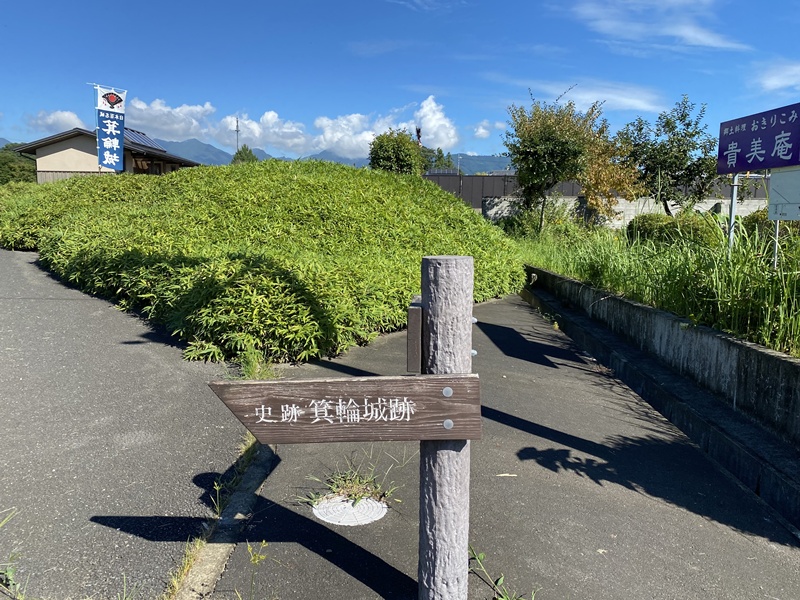
For this visit, I entered the castle from the Karamete-guchi (Rear Gate). However, right near the entrance, a certain sign caught my eye... It was a "Beware of Bears" warning! While it's common to see warnings for snakes or wild animals at mountain castles, bears are definitely a surprise. Seeing that sign honestly made me a little nervous to proceed!
That being said, the weather was absolutely perfect for exploring a castle that day. I gathered my courage and pressed on.
By the way, although the Karamete-guchi serves as the rear entrance today, it was actually the Ote-guchi (Main Front Gate) during the rule of the Nagano clan. It is said that when Ii Naomasa—one of Tokugawa's Four Heavenly Kings—took over the castle, he established a new main gate elsewhere, turning this one into the rear entrance.
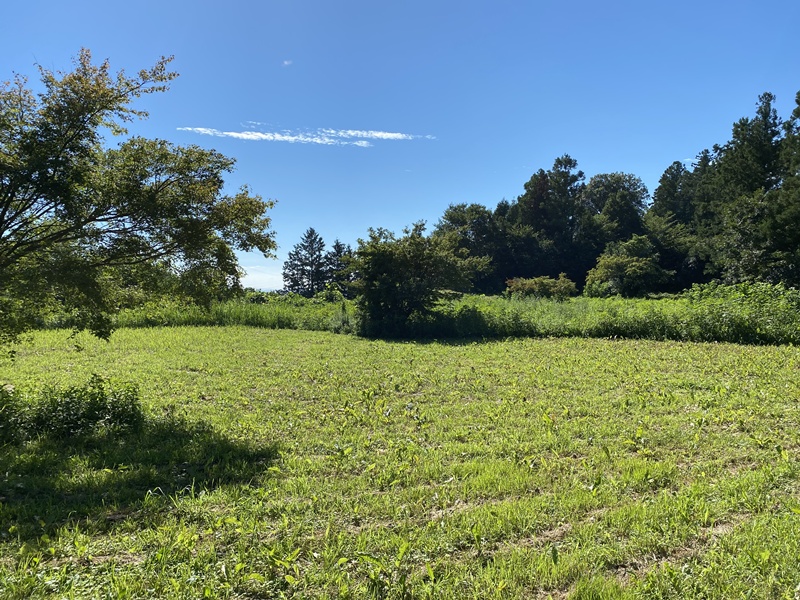
Just past the rear entrance is the Inari Kuruwa (Inari Bailey). Although no buildings remain, a stone monument marks the spot, making it easy to understand the layout.
This triangularly shaped area was once protected by a water moat on its eastern side. The water is gone now, but since the vast majority of Minowa Castle's moats are dry moats (Karabori), the fact that a water moat existed here is actually a very rare and interesting feature.
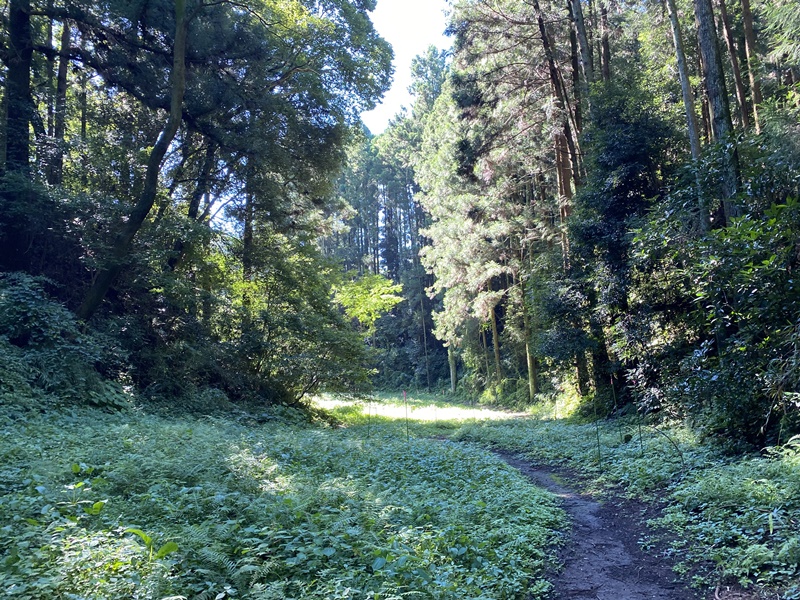
Passing through the Inari Kuruwa, the scenery dramatically changes, giving off the distinct atmosphere of a deep mountain trek.
Minowa Castle was brilliantly designed to utilize the natural terrain, including the Harunashirakawa River and the surrounding wetlands (marshes).
Rather than relying solely on man-made walls, the builders turned rivers, marshes, and steep mountain slopes into natural defensive barriers. It is truly a natural fortress!
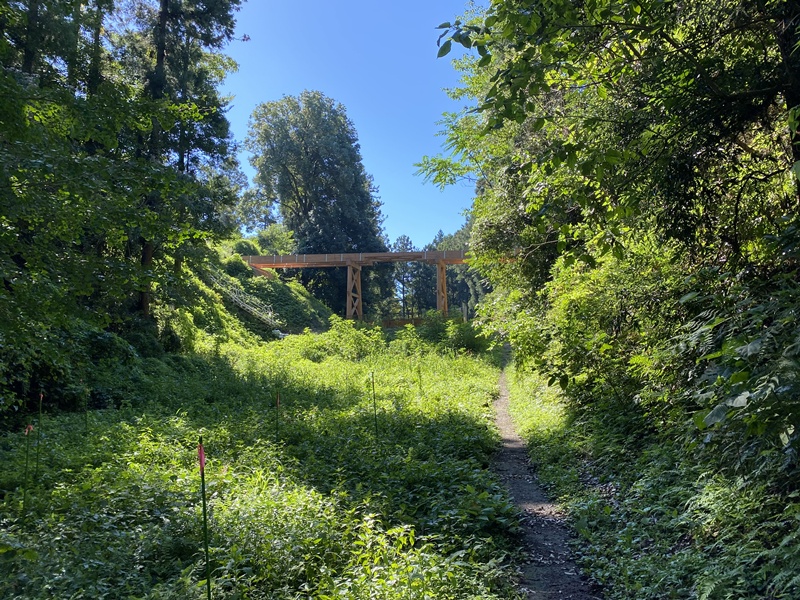
As I walked further along the mountain trail, a large bridge came into view in the distance. That bridge connects to the core areas of the castle, like the Ninomaru and Honmaru.
Walking around here, you really realize just how massive Minowa Castle is! The grounds cover about 36 hectares, making it one of the largest in the Kanto region. That’s roughly equivalent to 7.8 Tokyo Domes!
Despite feeling like you are deep in the mountains, this is a "hilltop castle" (Hirayama-jyo), so the slopes aren't overly steep. The dirt paths can be a bit uneven, but it’s not an exhausting mountain climb, making it surprisingly easy to walk considering its vast size.
However, because it is so rich in nature, there are a lot of bugs! Especially in summer, it might be hard to focus on the history without some protection, so I highly recommend bringing a good insect repellent!
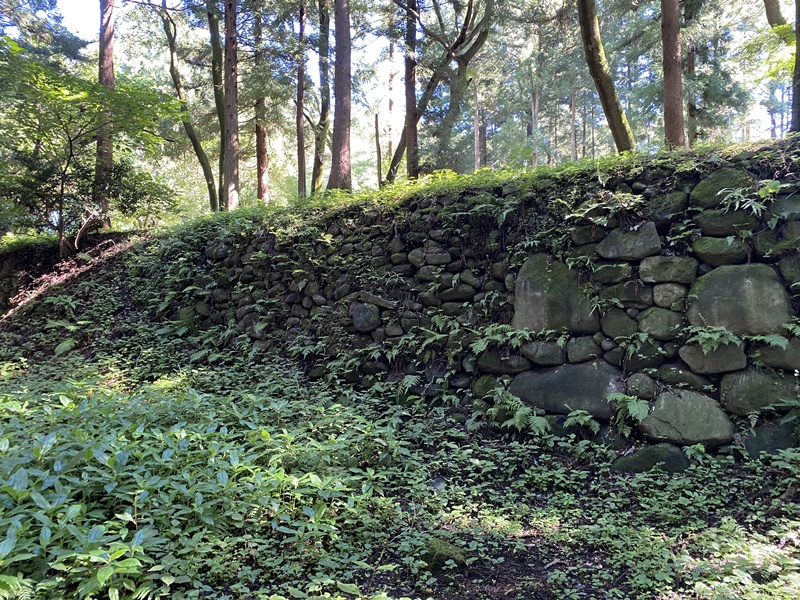
This is the Sannomaru and the stone wall area below it. While no structures remain on the Sannomaru, stone monuments clearly show you where everything was.
The highlight here is the stone wall itself. It was built using the Nozura-zumi technique (stacking natural, unshaped stones), beautifully preserving the rugged yet highly advanced engineering skills of the Sengoku period.
Excavations have revealed massive stone walls exceeding 4 meters in height. At the time, most Kanto castles were built entirely of earth, making stone walls incredibly rare. The presence of such magnificent high stone walls proves just how vital Minowa Castle was as the key stronghold of the northern Kanto region.
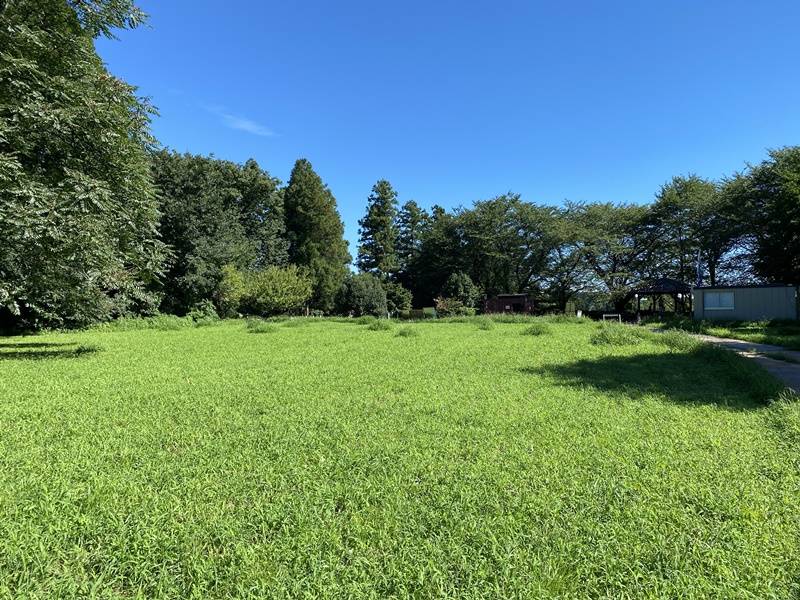
Exiting the mountain trail, the view suddenly opened up into a beautifully maintained grassy area. This is the Kaku-umadashi Nishi-koguchi.
This vast space is the "Kaku-umadashi" bailey, located south of the Ninomaru. Typically, an "Umadashi" refers to a small outpost used by troops to launch counterattacks. However, Minowa Castle's Umadashi was so gigantic that it functioned as an independent bailey (Kuruwa), hence the special name "Kaku-umadashi."
This was exactly the linchpin of their defense and the starting point for massive counter-offensives.
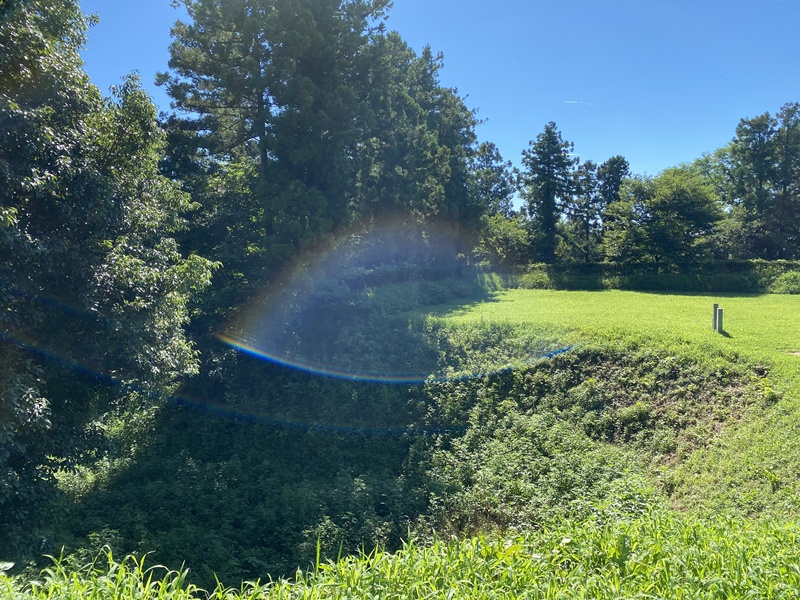
This is Minowa Castle's famous Great Dry Moat (Ohorikiri). It completely slices the castle into north and south sections. It is a staggering 30 meters wide and over 10 meters deep! Looking down into it, the sheer scale is so intense you feel like you might get sucked in.
It’s mind-blowing to think this was dug entirely by human hands using primitive tools like hoes, long before heavy machinery existed. The unimaginable physical labor required to dig and move this much earth is truly humbling.
Thanks to this moat, the castle is divided, connected only by a single, narrow earthen bridge (Dobashi). If enemies captured the southern side, the defenders could simply destroy the bridge, completely securing the remaining northern side (including the Honmaru). By forcing enemies into a single chokepoint and preventing simultaneous attacks, this was undeniably the ultimate line of defense.
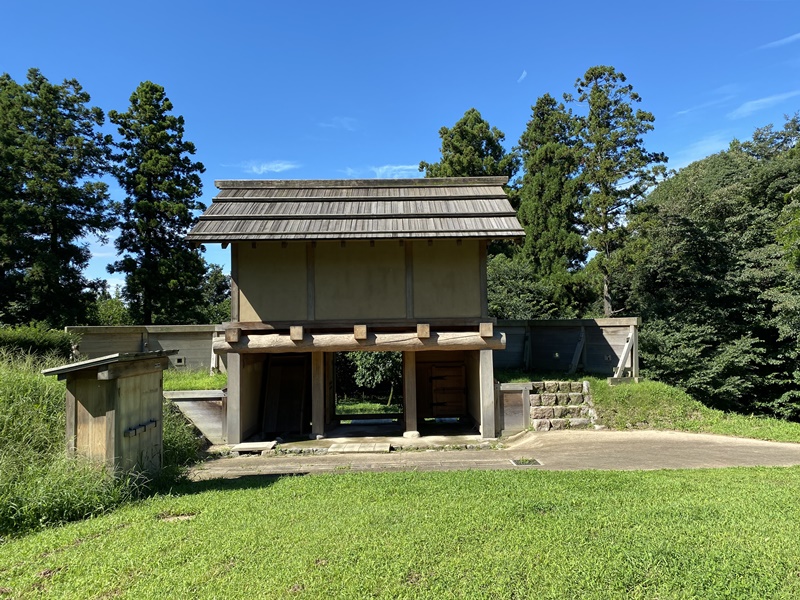
This is the Kaku-umadashi Nishi-koguchi Gate. Reconstructed in 2016, it has quickly become the new symbol of Minowa Castle. It perfectly replicates the majestic two-story turret gate from the era when Tokugawa’s general, Ii Naomasa, ruled the castle.
According to surveys, it is the largest gate ever discovered within the castle grounds.
Since this spot is where two major approach routes converge, this massive, heavily fortified gate was built as the ultimate chokepoint to stop invading enemies. Thanks to this reconstruction, you can vividly experience the intimidating power the castle held in the past.
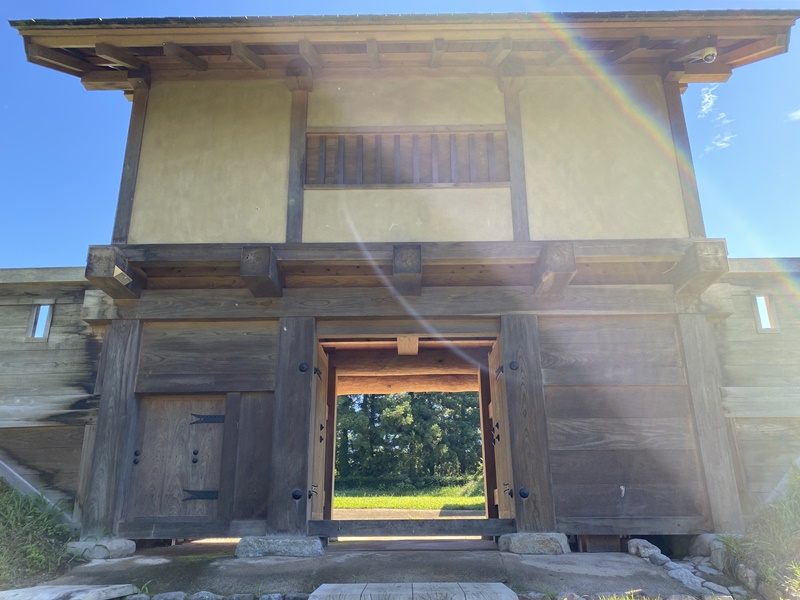
Standing directly in front of the gate. It looked impressive from afar, but looking up from directly underneath, its massive size is truly overwhelming.
In fact, during excavations, eight foundation stones (base stones) from the Ii clan era were found here. The gate was accurately reconstructed based on their exact positions and sizes.
When you realize that people from centuries ago actually erected giant pillars in this exact spot, the sheer power of the gate fills you with the profound weight of history.
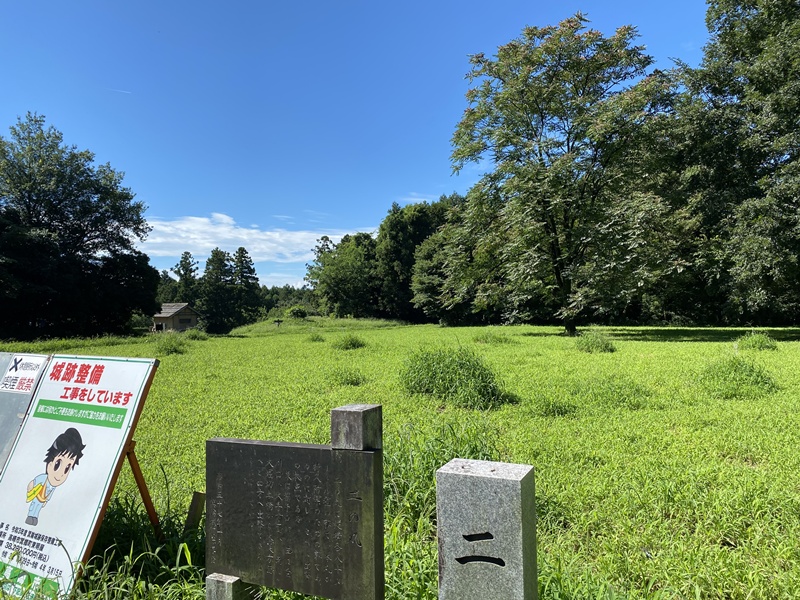
This is the Ninomaru (Second Bailey). Located just past the Kaku-umadashi, there are no remaining buildings, but a grand stone monument clearly marks the location.
By the time you reach this area, the ground is beautifully leveled, and instead of feeling like you are deep in a mountain, it feels more like a spacious, open park.
The Ninomaru is incredibly expansive, measuring about 80 meters in both length and width. It was used as a staging ground for troops to launch attacks. From here, a large army could be kept on standby, ready to deploy instantly to the north, south, east, or west. It was the absolute nerve center for offensive maneuvers!
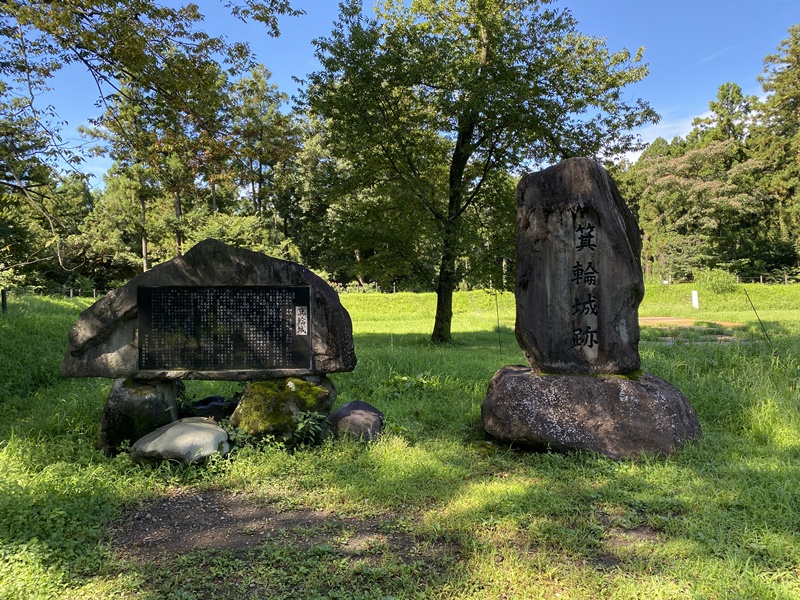
A stone monument dedicated to Minowa Castle stands quietly here.
The stone on the left provides detailed information about the castle's history and overview. Reading this history while looking back at the long path I just walked, I could deeply feel the historical weight of this place—a crucial stronghold that many legendary warlords fiercely fought to possess.
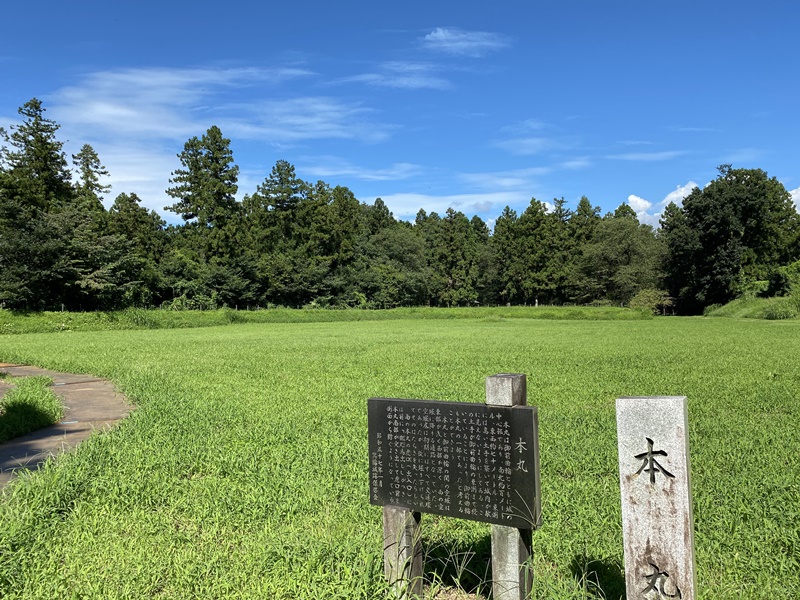
Finally, the Honmaru (Main Bailey). Spanning an impressive 70 meters east to west, this vast area was equipped with highly formidable defenses designed to withstand prolonged sieges. In particular, a high earthen wall (dorui) was constructed on the eastern side to prevent enemies below from observing the movements inside the castle. This allowed commanders to devise strategies in complete safety.
Although the buildings are gone, the area is beautifully maintained with stone monuments, informational plaques, and an observation space.
There are paths continuing further beyond the Honmaru, but for a moment, I just stood in this vast space, trying to feel the presence of the great warlords of the past.
Research has revealed that this Honmaru underwent major reconstructions across three different eras: "Phase 1: Nagano & Takeda Clans," "Phase 2: Hojo Clan," and "Phase 3: Tokugawa Clan (Ii Naomasa)." Every time the ruler changed, the castle was upgraded with the latest military technology. It truly is a living witness to history!
Exploring the Surrounding Area
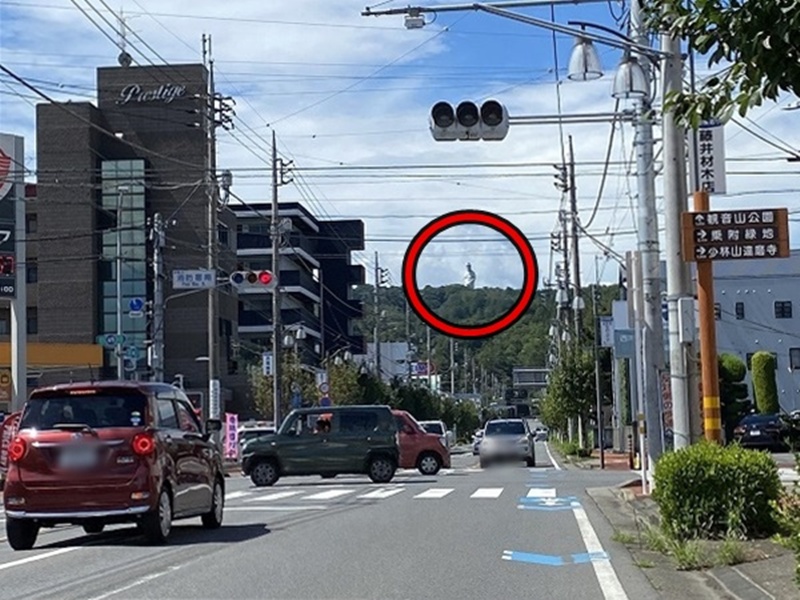
After leaving Minowa Castle, I headed to the Takasaki Byakui Daikannon (White-Robed Great Kannon).
As the name "Great Kannon" suggests, this statue is absolutely massive. In fact, it is so huge that you can clearly see it looking over the city from downtown! (I circled it in red in the photo above.)
Being able to see it so clearly from this far away really puts its immense size into perspective. Watching over the city from the hilltop, its presence is truly outstanding.
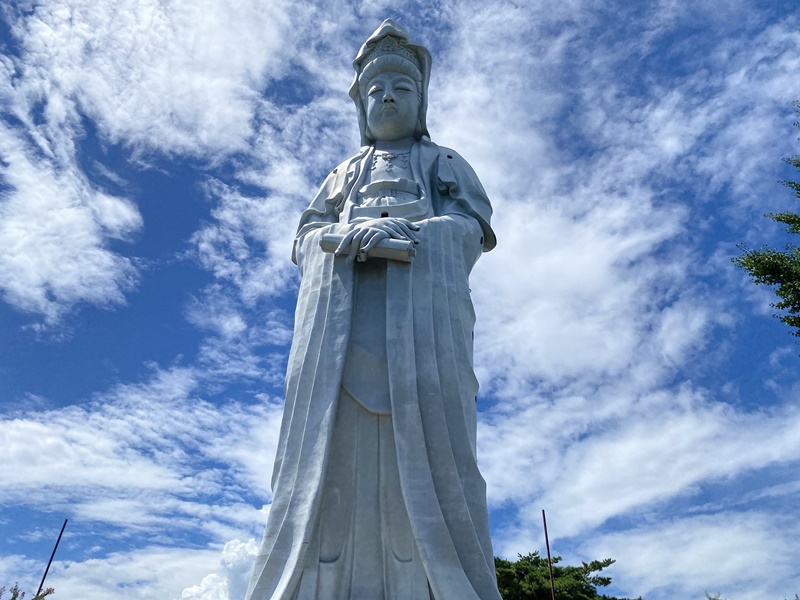
Here we are at the Takasaki Byakui Daikannon. Looking up at it from right underneath, its overwhelming scale is completely on another level compared to seeing it from afar.
It stands 41.8 meters tall and weighs an astonishing 5,985 tons! Built in 1936, it has been the gentle, watchful symbol of Takasaki ever since. The interior has 9 levels, and from the observation windows at the height of the Kannon’s shoulders, you can enjoy a spectacular view of the cityscape and the famous three mountains of Jomo (Gunma).
The Kannon is located in the Mt. Kannon (Kannonyama) area, a fantastic tourist spot filled with attractions like the Omotesando shopping street, Kannonyama Park, and the Hibiki Bridge. Yet, the Great Kannon unquestionably remains the shining star of the area.
The Kannon resides on the grounds of Jigen-in Temple, an ancient temple with history dating back to the mid-Kamakura period. First, I made sure to pay my respects at the main hall.
Near the stairs on the grounds, there is an admission desk. Viewing the statue from the outside is free, but if you want to enter the "Tainai" (inside the statue), you pay a small fee here (300 yen for high school students and adults). Since I was already there, I decided to go inside!
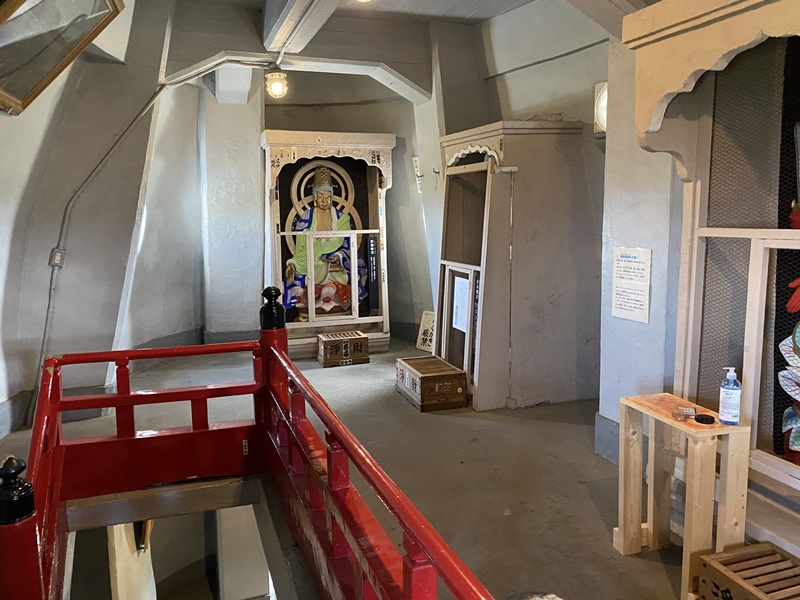
Inside the Kannon. The floor space on each level isn't very wide, but you climb a spiral staircase spanning 9 floors to reach the top.
By the way, there are exactly 146 steps to the top. It might not sound like a lot, but actually climbing them is quite a good workout!
Along the staircase, there are 20 statues of Buddhas and high-ranking monks enshrined. Offering prayers to the various Buddhas as you climb step by step is the unique charm of this "Tainai-meguri" (inner journey). There was even a statue of the legendary Prince Shotoku!
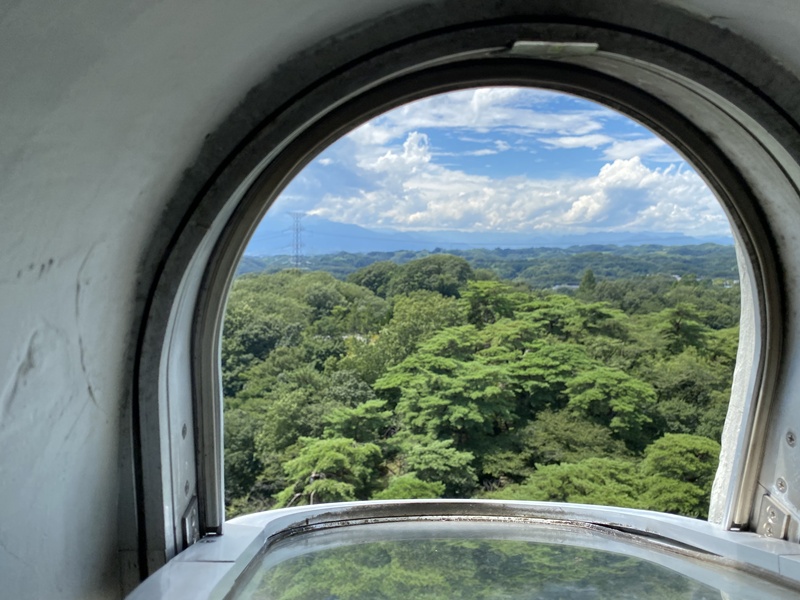
The view from the top observation windows. It made the tough climb completely worth it! From here, you have a panoramic sweep of Gunma's famous Jomo Sanzan mountains and the vast Kanto Plain stretching into the distance.
The weather was flawless, blessing me with a truly magnificent view. Realizing that I was looking out over the city from the perspective of the Kannon's shoulders filled me with a deep sense of peace and gratitude.
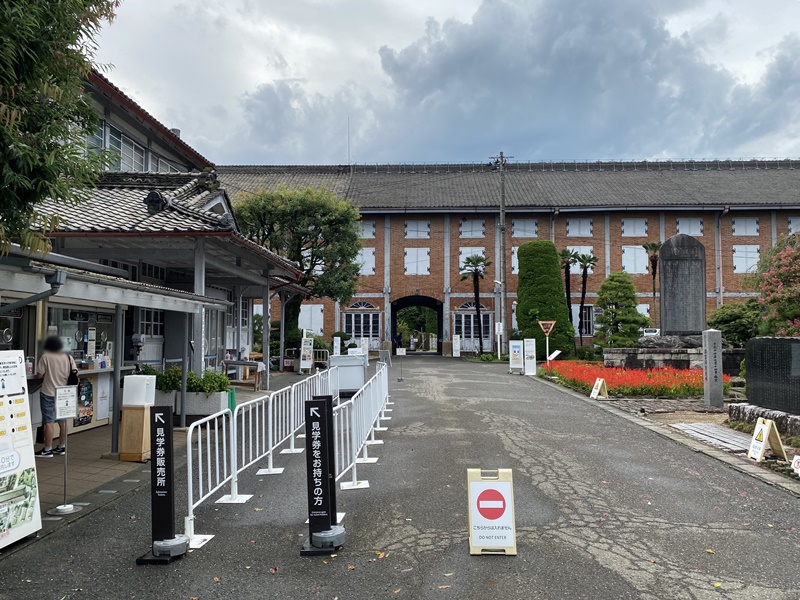
Next up is the World Heritage Site, Tomioka Silk Mill. When visiting Gunma, this is an absolute must-see on everyone’s itinerary. A quick heads-up if you’re driving: there is no parking inside the mill grounds. You'll need to park at a nearby municipal or coin parking lot and walk a short distance.
However, the walk to the mill is delightful. The street is lined with nostalgic old shops and souvenir stalls, giving the whole area a wonderful, retro historical vibe. Just taking a stroll here is fun in itself.
Admission is 1,000 yen for adults. You buy your ticket at the entrance machines before heading in. As expected of a World Heritage Site, it was bustling with tourists. The red brick buildings, constructed in the Meiji era, have been preserved exactly as they were, standing proudly as a monument to Japan's industrial modernization. Even if you aren't a huge history buff, this is a spot you simply have to visit at least once.
The photo shows the entrance and the National Treasure, the East Cocoon Warehouse (Higashi Oki-mayujo). When people think of the Tomioka Silk Mill, this iconic massive red brick building is usually what comes to mind.
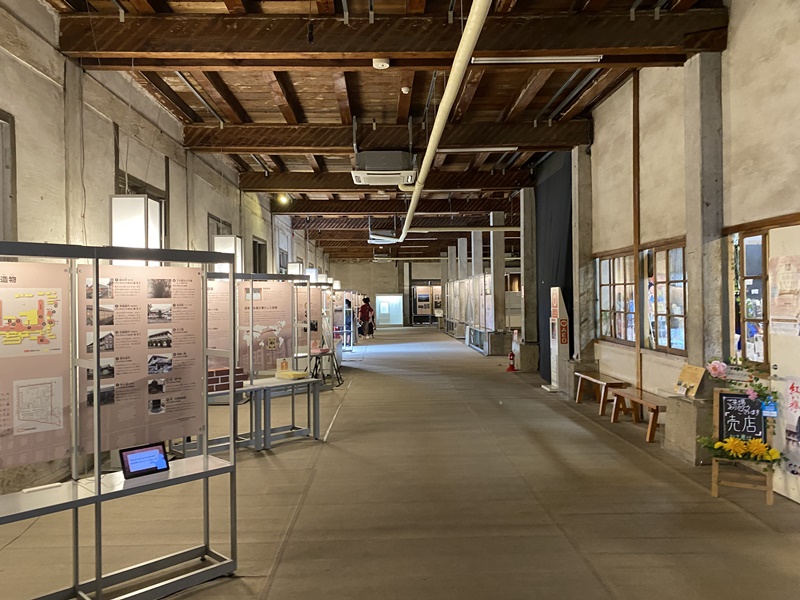
Inside the East Cocoon Warehouse. Back in the day, the first floor was used for offices and workspaces, while the second floor served as a massive storage area for dried cocoons. Imagining this gigantic, 100-meter-long warehouse completely packed to the ceiling with cocoons gives you an idea of the incredible scale of their operations.
The right side of the first floor now serves as an exhibition room (museum). It is filled with precious historical materials where you can learn all about the mill's history and how it operated. I highly recommend taking your time here—learning the background makes the rest of your tour infinitely more enjoyable. During my visit, there were even exhibits about Shibusawa Eiichi, the famous historical figure featured on Japan's new 10,000 yen bill!
The left side of the first floor has been converted into a museum shop. They sell beautiful silk products made from Tomioka cocoons, elegant scarves, and local sweets. It was the perfect place to find a nice souvenir for myself.
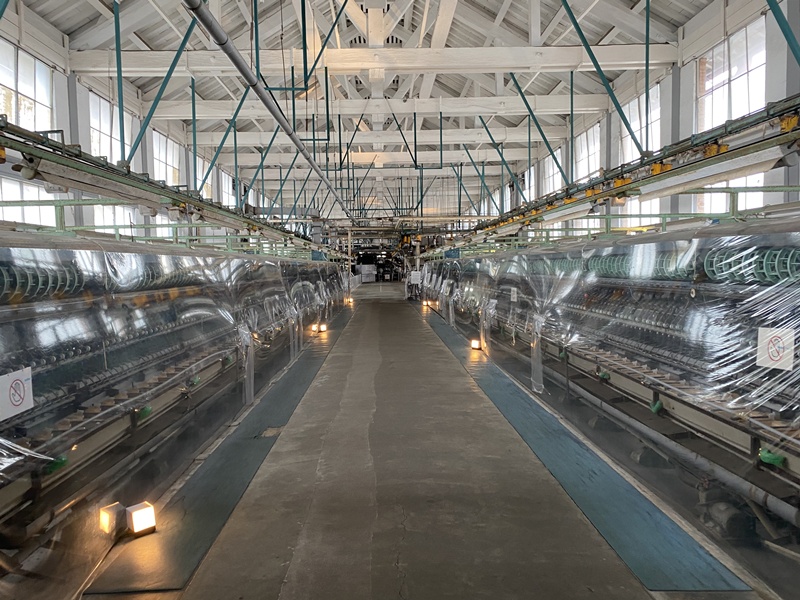
This is the National Treasure: the Silk Reeling Plant. If you've ever studied Japanese history or watched documentaries, you’ve probably seen pictures of these rows upon rows of machines.
Inside this immense 140-meter-long factory, the automatic silk reeling machines from back in the day are preserved and displayed exactly as they were. Countless women once worked right here, extracting raw silk from cocoons. The atmosphere of the founding era is perfectly encapsulated in this room; I was genuinely overwhelmed by it.
The grounds of the Tomioka Silk Mill are surprisingly vast. It wasn't just a factory—it also housed dormitories for the workers, a clinic, and other facilities. It really functioned more like its own little town.
Interestingly, when I peeked into the preserved dormitories, I noticed posters of pop idols hanging on the walls! For a second, I was confused—pop idols in the Meiji era?! But it turns out, the Tomioka Silk Mill was actually an active, operational factory right up until 1987 (Showa 62)!
So, the lived-in atmosphere of the Showa era has been left exactly as it was. Realizing that the workers back then decorated their rooms with posters of their favorite celebrities just like we do today made me feel a sudden sense of connection. Human nature really doesn't change, does it? (laughs)
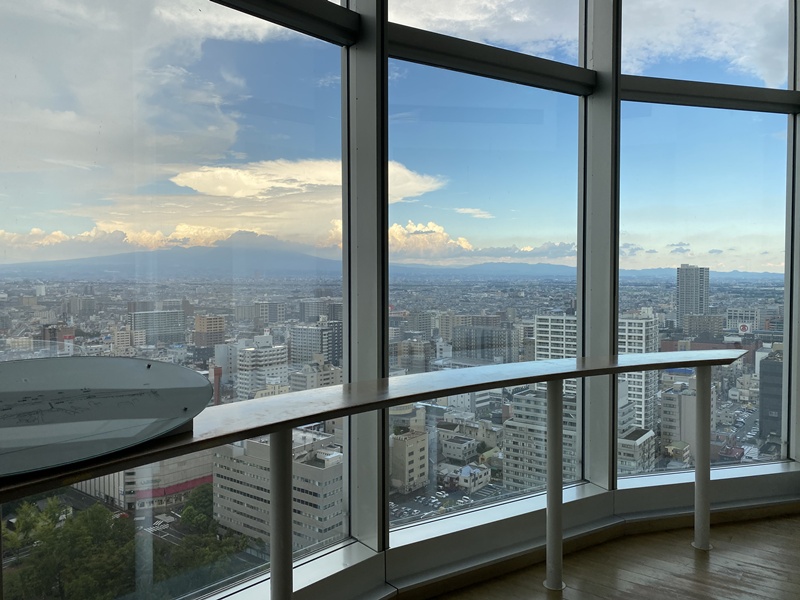
Next, I visited the Observation Lobby on the 21st floor of Takasaki City Hall. I got caught in a sudden downpour while moving between spots, but thankfully, the rain completely stopped by the time I arrived.
There is an underground parking lot (paid), but if you use the observation lobby, you get 1 hour of parking for free! You just need to get your parking ticket validated (stamped), so don't forget to do that. It’s a really great service.
The observation lobby is on the top floor (21st floor). It is open from 8:30 AM to 10:00 PM. And incredibly, despite offering such a spectacular view, admission is completely free!
From the windows, you get a stunning view from about 90 meters above ground. There was an information board, so I tried to spot the Takasaki Kannon I had visited earlier. Unfortunately, it wasn't on the board. Apparently, you can see it from the restaurant side, but from the free lobby area, it's hidden in a blind spot due to the angle.
The lobby itself isn't overwhelmingly huge, but with its floor-to-ceiling glass walls, it feels incredibly open and spacious.
Thanks to the recent rain, the air was crystal clear, and the contrast between the blue sky and the clouds was breathtaking. Not only could I see the entire city of Takasaki, but the view stretched all the way to the distant mountains. I spent a very luxurious and relaxing time here. Since it’s open until 10:00 PM, I imagine it must be a phenomenal spot for night views as well!
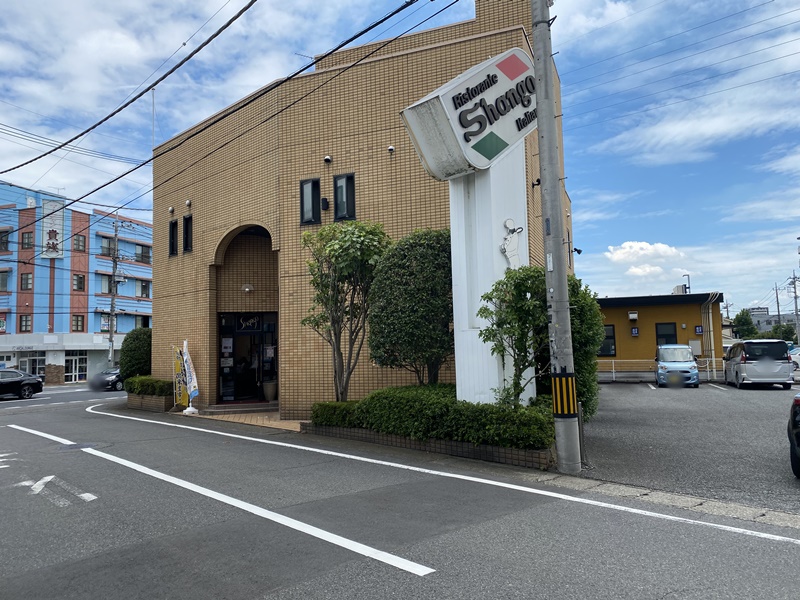
Finally, it was time for food! I arrived at the Italian restaurant, Shango.
Takasaki City is actually famous across Japan as a "Pasta City." And among all the restaurants here, Shango is the legendary pioneer, widely considered the true originator of Takasaki Pasta.
I purposely visited a bit after the peak lunch hour, but the restaurant was still almost completely full! There was a sign-up board at the entrance, making it obvious that if you come right at lunch, waiting in line is absolutely inevitable. It’s that popular!
Inside, the walls are lined with autographs from famous celebrities who have eaten here. Since the restaurant is frequently featured on TV and in magazines, people from all over flock here for a taste. My expectations were soaring before I even sat down!
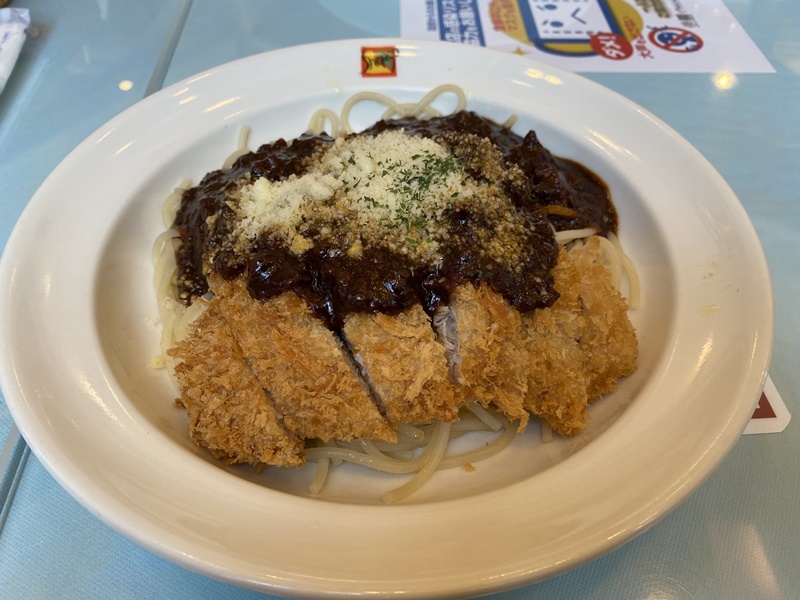
I ordered their signature dish: the Shango-style Pasta.
When it was served, I was genuinely shocked by its visual impact! Sitting right on top of a bed of dark, rich sauce is a massive, crispy pork cutlet (Tonkatsu). At first glance, you can't help but wonder, "Wait, is this really pasta?!" (laughs)
This unique, dark sauce is Shango’s top-secret original meat sauce. The flavor is incredibly distinct—it’s entirely different from a standard meat sauce or a typical demi-glace. It has a mysterious, profound depth. The perfect balance of sweetness, richness, and a very subtle hint of bitterness makes this thick sauce pair flawlessly with both the Tonkatsu and the pasta.
They are also very particular about their noodles, using fresh, raw pasta. It has a wonderful elasticity and a delightfully chewy (mochi-mochi) texture. The thick noodles gripped the rich sauce perfectly. It was an incredibly satisfying meal, allowing me to fully savor a unique local Takasaki flavor you won’t find anywhere else.
| Item | Details |
|---|---|
| Restaurant Name | Shango (Tonya-machi Main Branch) |
| Address | 1-10-24 Tonyamachi, Takasaki City, Gunma (15 min walk from JR Takasaki Tonyamachi Station) |
| Hours | Tue–Sun: 11:00 AM – 9:30 PM (L.O. 9:00 PM). Closed: Mondays, and the 2nd & 4th Tuesdays. |
| Seating / Facilities | Non-smoking, 57 seats, Parking for 30+ cars. |
| Budget | 1,000 – 2,000 yen |
| Signature Dishes | Shango-style Pasta: S size 853 yen / M size 860 yen Vesuvio (Seafood Tomato Sauce): S size 1,100 yen / M size 1,320 yen |
| Highlights | A historic Italian restaurant founded in 1968. Their signature "Shango-style" features pasta topped with Tonkatsu and an original dark meat sauce. Past winner of the "King of Pasta" competition. Expect lines during lunchtime! |

The Shango-style spaghetti was incredibly massive, but it was so delicious I completely devoured it in no time! There seem to be a lot of Italian restaurants in Gunma, but this definitely felt like a unique Italian flavor that you can only experience here! ☆
Castle Stamp & Access Guide
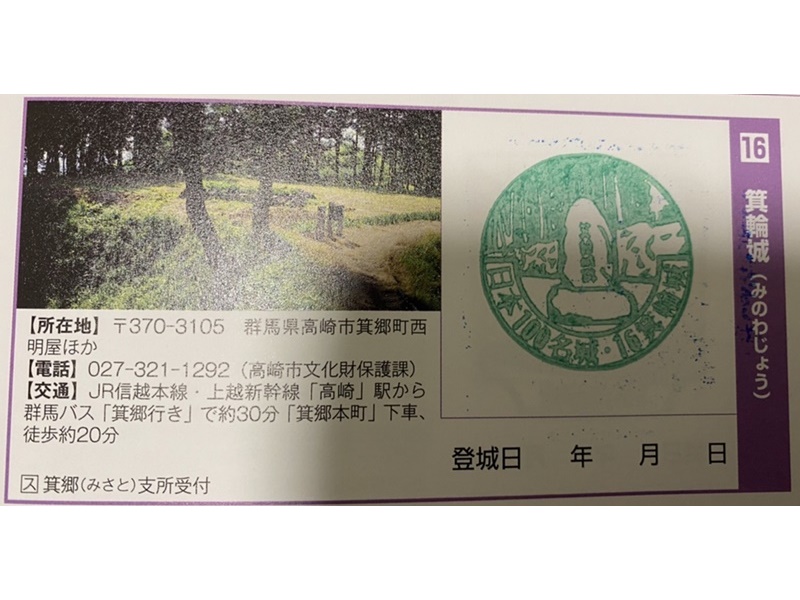
| Item | Details |
|---|---|
| Location | 1. Takasaki City Misato Branch Office 2. Misato Community Center 3. Misato Yaharajuku Cafe |
| Hours | Branch Office: 8:30 AM – 5:15 PM (Weekdays only) Community Center: 9:00 AM – 5:00 PM |
| Closed | National holidays, Year-end/New Year holidays (Varies by facility) |
| Phone | 027-371-5111 (Takasaki City Misato Branch Office) |
| Fee | Free to enter |
| Note | The stamp is available at any of these three locations. |
| Item | Details |
|---|---|
| Address | Nishiakiraya, Misatomachi, Takasaki City, Gunma (Minowa Castle Ruins) |
| Access (Train/Bus) | From JR Takasaki Station → Take the Gunma Bus and get off at "Misato Honmachi" → Approx. 20–30 min walk. |
| Bus Details | Generally, you take a bus bound for the "Misato" direction from the West Exit of Takasaki Station. |
| Parking | Free parking lot available at the Minowa Castle Ruins. Public restrooms are also provided. |
| Phone | 027-371-5111 (Takasaki City Misato Branch Office) |
| Time Needed | Approx. 30–45 mins. Allow a little under an hour if you want to carefully explore the earthen walls and dry moats. |

Although Minowa Castle doesn't have steep mountain climbs, you will be walking through forests and dirt trails, so comfortable walking shoes are highly recommended! Also, it's definitely a good idea to bring bug spray. Oh, and remember that "Beware of Bears" sign? Please stay safe and stay alert while exploring!
Summary
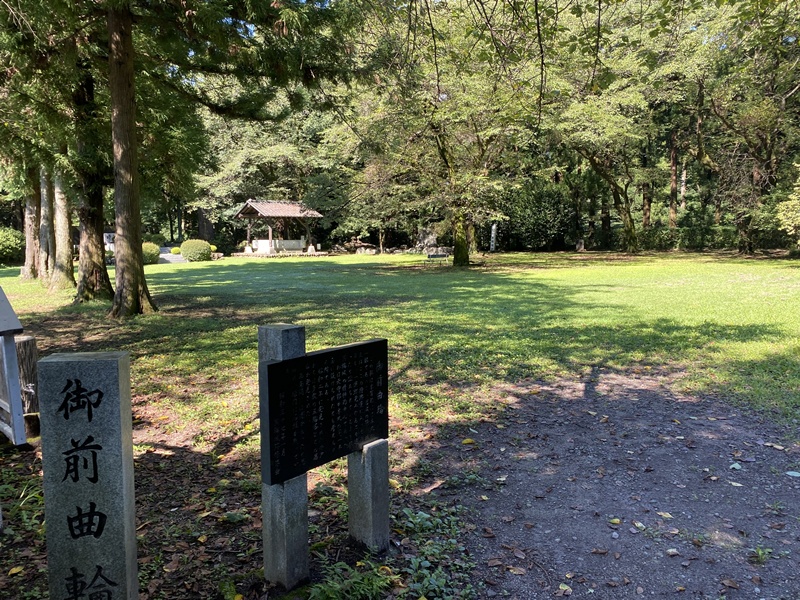
The photo above shows the Gozen Kuruwa, located even deeper within the castle grounds past the Honmaru. It is believed to have functioned as an extension of the main bailey, but there was a distinctly special, almost sacred atmosphere flowing through this particular spot.
Minowa Castle didn't have a massive, towering "Tenshukaku" (Main Keep) like later castles did. However, standing in the Gozen Kuruwa makes you imagine that this very place was the spiritual center and true symbol of the castle, serving essentially the same purpose as a main keep.
There are no flashy decorations here, but it is a place completely filled with the spirit and dedication of the people who fought to protect it. It was the perfect spot to wrap up my exploration of the castle.
This trip was incredibly fulfilling—starting with the fierce Sengoku history of Minowa Castle, looking up at the Takasaki Kannon watching over the city, touching the industrial modernization of the World Heritage Tomioka Silk Mill, and finishing with the iconic local Shango pasta! It was a journey thoroughly steeped in the history, culture, and flavors of Gunma.
Walking through nature, touching history, and eating delicious food... Each spot had its own unique charm, making it a perfectly satisfying day. If you ever have the chance, please do visit Takasaki!
Minowa Castle was once the stronghold of Ii Naomasa, the famous "Red Demon" known for his elite red-armored troops (Akasonae). The area around the Koguchi gate is preserved in such great condition, it made me wonder, "Did Naomasa look at this exact same view?" Feeling that kind of historical romance is the best part of exploring castles! ♪
So true! Plus, we practically had the whole place to ourselves today, making it so relaxing to walk around. Having the site empty really makes it feel like you're monopolizing the atmosphere of the past—it’s such a luxury!
There aren't many buildings left, but the grounds are so beautifully maintained. You can really tell how much the locals cherish this place! Also, the size of the Takasaki Kannon totally blew my mind! The fact that you can see it from the middle of the city shows just how overwhelming its presence is! ☆
It was even more impressive up close! Climbing all those stairs inside the Kannon was quite a workout, but the panoramic view from the observation windows was incredible. It was definitely worth the effort!
Yeah, it was a totally satisfying trip filled with history and amazing food! By the way, the castles around Minowa on the list are No. 15 Ashikaga Residence and No. 17 Kanayama Castle. Please check them out if you have the time! ♪
▼ Explore Castles in Kanto & Koshinetsu
Kanto Area
14. Mito Castle /
15. Ashikaga Residence /
16. Minowa Castle /
17. Kanayama Castle /
18. Hachigata Castle /
19. Kawagoe Castle /
20. Sakura Castle /
21. Edo Castle /
22. Hachioji Castle /
23. Odawara Castle /
Koshinetsu Area
24. Takeda Residence /
25. Kofu Castle /
26. Matsushiro Castle /
27. Ueda Castle /
28. Komoro Castle /
29. Matsumoto Castle /
30. Takato Castle /
31. Shibata Castle /
32. Kasugayama Castle


