
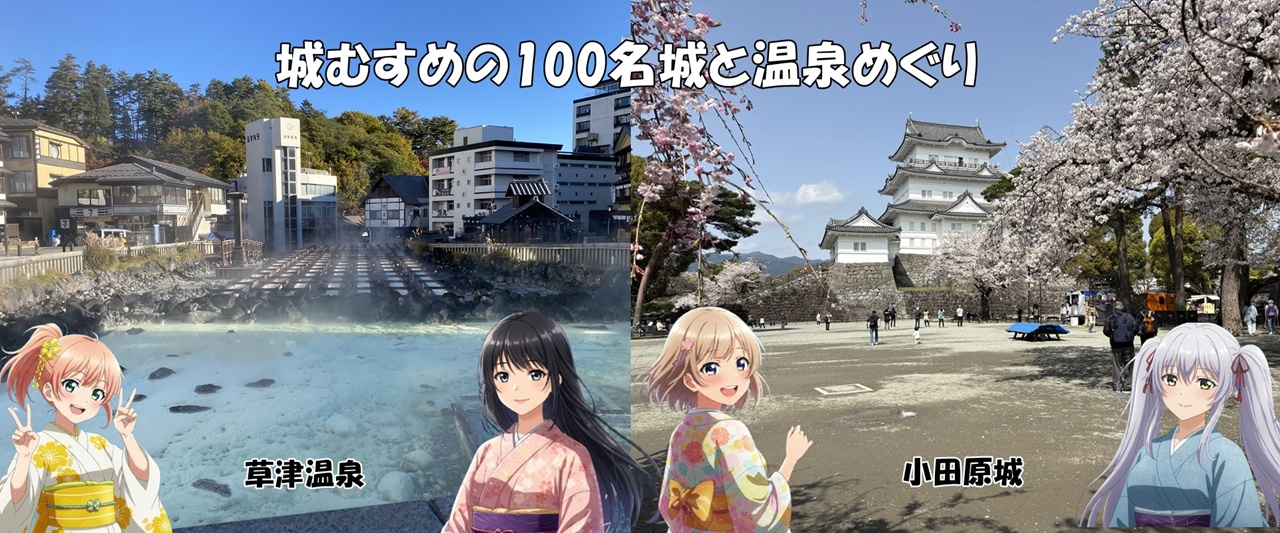

Hello! I'm Sakura, the Castle Maiden. I'll be your guide to Mito Castle today! I'm also excited to share some great sightseeing spots around the area. Let's get started! ♪

Mito Castle is a must-visit historical site in Ibaraki Prefecture! During the Edo period, it flourished as the home of the Mito Tokugawa clan—one of the three most prestigious families in the shogunate.
Basic Information
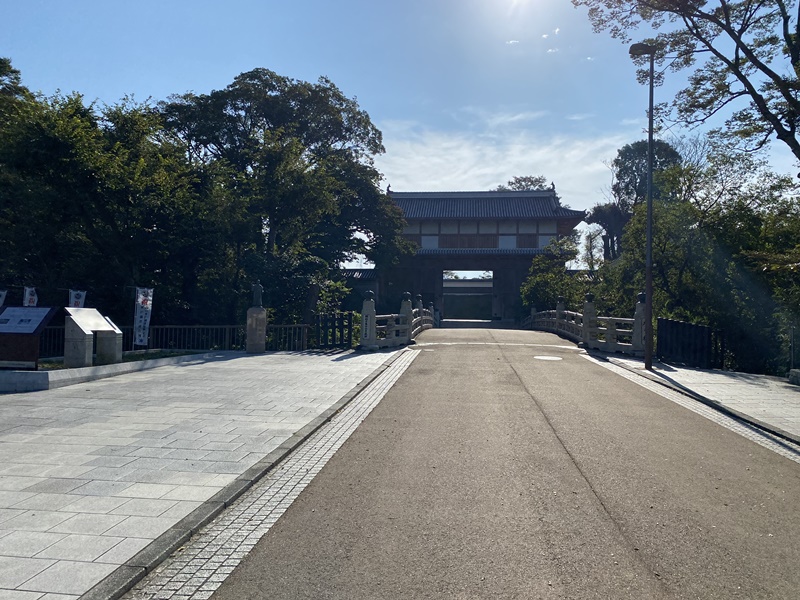
Mito Castle is said to have been founded during the Heian period by Baba Sukemoto. Because of its origins, it is sometimes called "Baba Castle," or "Suifu Castle" after an elegant old nickname for the Mito area.
Unlike many typical Japanese castles, Mito Castle features almost no stone walls. Instead, it is a magnificent "earthen castle" boasting some of the largest earthen embankments (dorui) in Japan. This defensive style brilliantly utilized the local soil and natural terrain, creating a massive and impregnable fortress that showcases the outstanding military strategy of the time.
| Era | Event | Lord / Ruler |
|---|---|---|
| Late Heian Period | Baba Sukemoto built the predecessor of Mito Castle. | Baba Sukemoto |
| Sengoku Period | Ruled by the Edo clan. | Edo Clan |
| Around 1590 | Satake Yoshinobu took over and conducted major renovations. | Satake Yoshinobu |
| 1602 | Tokugawa Yorifusa became the castle lord. | Mito Tokugawa Family |
| Meiji Period | The castle was abandoned, but structures like the Kodokan school survived. | ― |
| Modern Day | The ruins and Kodokan are preserved as popular historic tourist spots. | ― |
Mito Castle is No. 13 on Japan's Top 100 Castles list! It is also highly famous as the home of the legendary Vice-Shogun, Tokugawa Mitsukuni (Mito Komon)! ♪
About the Castle
Mito Castle is a stunning "hirayama-jyo" (hilltop castle) located in Mito City, Ibaraki Prefecture. Ingeniously utilizing the natural hilly terrain, it boasts some of the largest earthen embankments in Japan.
Famous as the residence of the Mito Tokugawa clan—one of the three noble branches of the Tokugawa family—the castle flourished as the heart of the Mito castle town during the Edo period. The second lord of the Mito domain, Tokugawa Mitsukuni (affectionately known as "Mito Komon"), made extraordinary contributions to academics and culture, most notably by commissioning the monumental history book, "Dai Nihon-shi" (Great History of Japan).
The Mito domain, home to the Vice-Shogun, strictly valued frugality and education. Within the castle grounds, they established the "Kodokan," one of Japan's largest domain schools. It played a crucial role as a major center for learning and Japanese culture, particularly for "Mito-gaku" (Mito studies).
Today, structures such as the Otemon Gate, the Ninomaru Corner Turret (Yagura), and the ancient Yakui Gate have been beautifully restored or preserved. From the observation deck, visitors can enjoy breathtaking panoramic views of Mito City.
The legendary TV character "Mito Komon" is actually based on the real Lord Tokugawa Mitsukuni! His famous sidekicks, Kaku-san and Suke-san, were also based on real people. However, instead of being tough bodyguards, they were actually brilliant scholars!
Walking Around Mito Castle
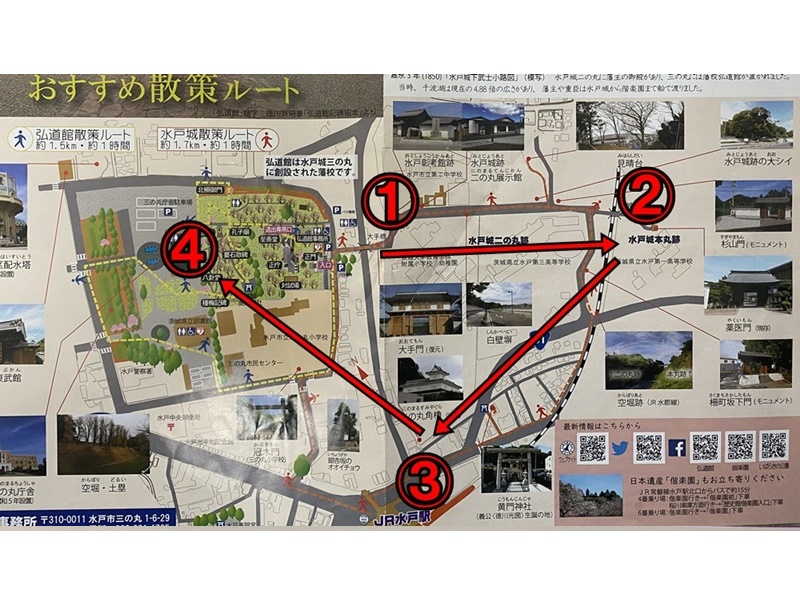
For my walk, I decided to save the Kodokan—located in the Sannomaru area—for last. So, my route went from Ninomaru, to Honmaru, and finally to Sannomaru.
Usually, starting from Sannomaru (which is closest to the station) is the standard route. However, since the Kodokan is the absolute highlight among the remaining structures, I wanted to keep the best for the end!
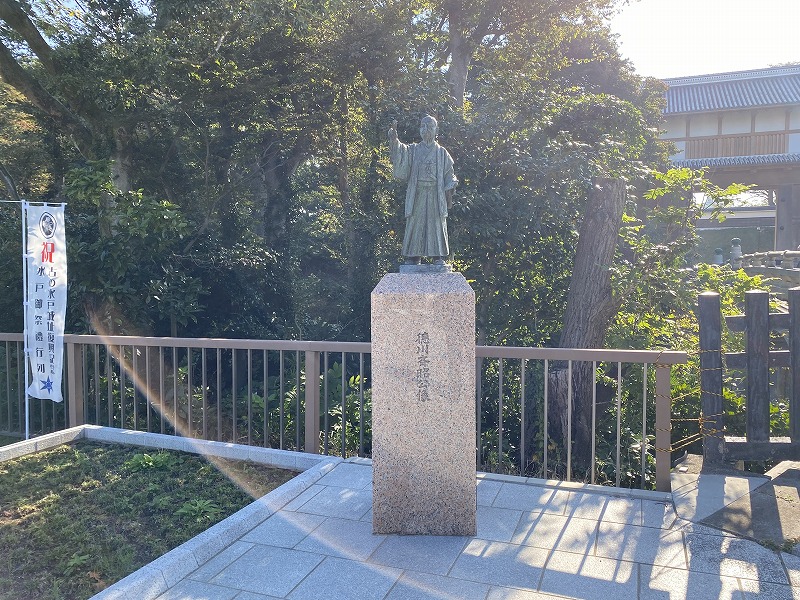
The image above is the statue of Tokugawa Nariaki. He was a visionary lord who implemented major domain reforms (the Tenpo Reforms) and founded the Kodokan school.
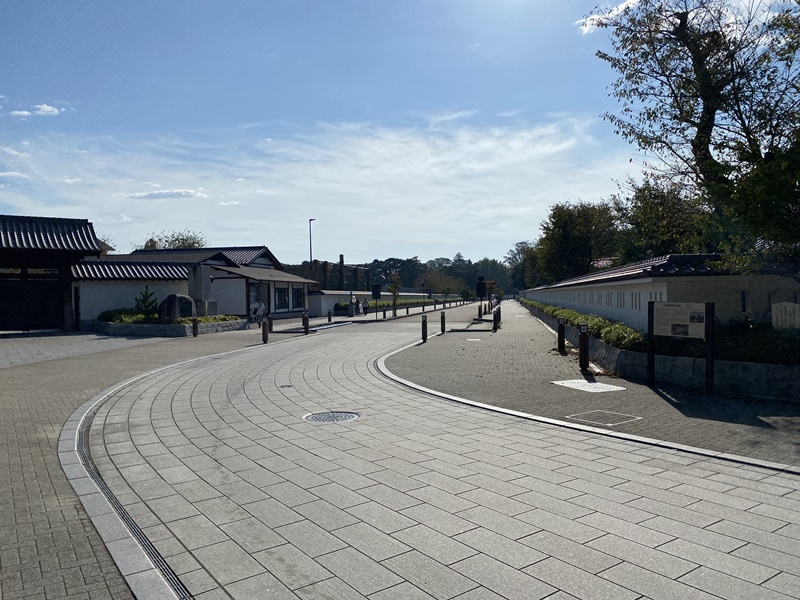
This is the Ninomaru area. Historically, this was the central hub of Mito Castle, where crucial government buildings once stood side by side.
It was also home to the "Shokokan"—a special office established by the Mito domain strictly for compiling the "Dai Nihon-shi" (Great History of Japan). The project was originally started by Tokugawa Mitsukuni at his Edo estate, but was later moved here to the Ninomaru.
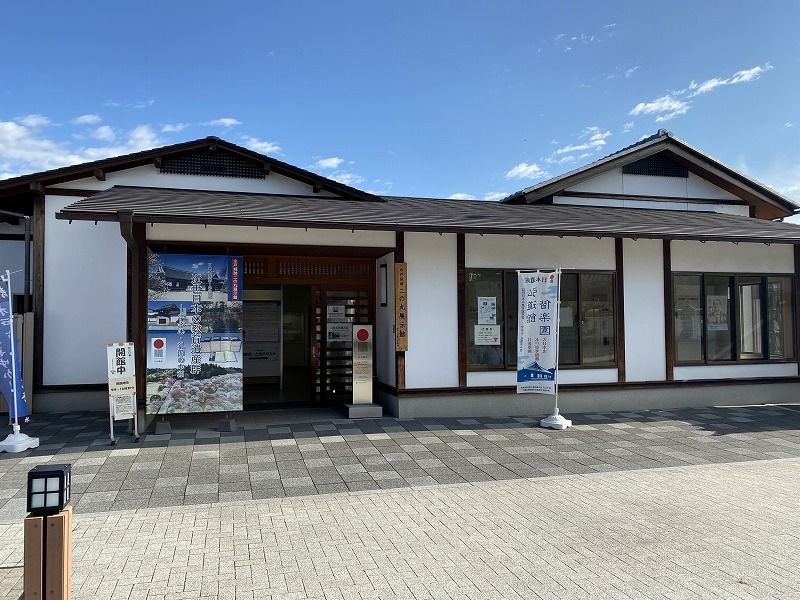
At the Ninomaru Exhibition Hall, you can view precious historical artifacts related to the castle—completely free of charge!
The exhibits include not only informational panels but also genuine excavated items, like old roof tiles and pottery. It was a fascinating learning experience.
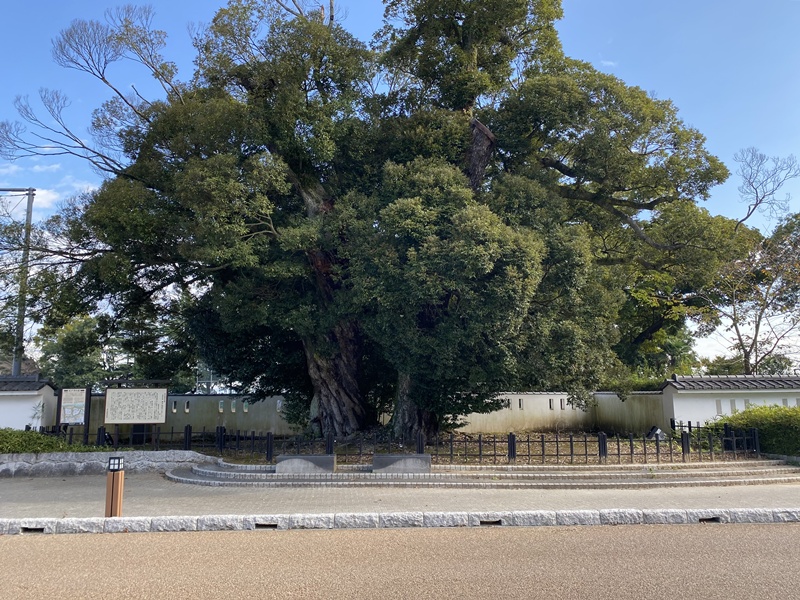
This is the Giant Chinquapin Tree (O-shii) of the castle ruins. It’s an ancient tree, over 400 years old, that has survived since the Sengoku period. Its massive size commands an overwhelming presence.
To think that it has stood here for four centuries means the great Lord Mitsukuni might have gazed upon these very leaves. It truly stirs up a sense of historical romance.
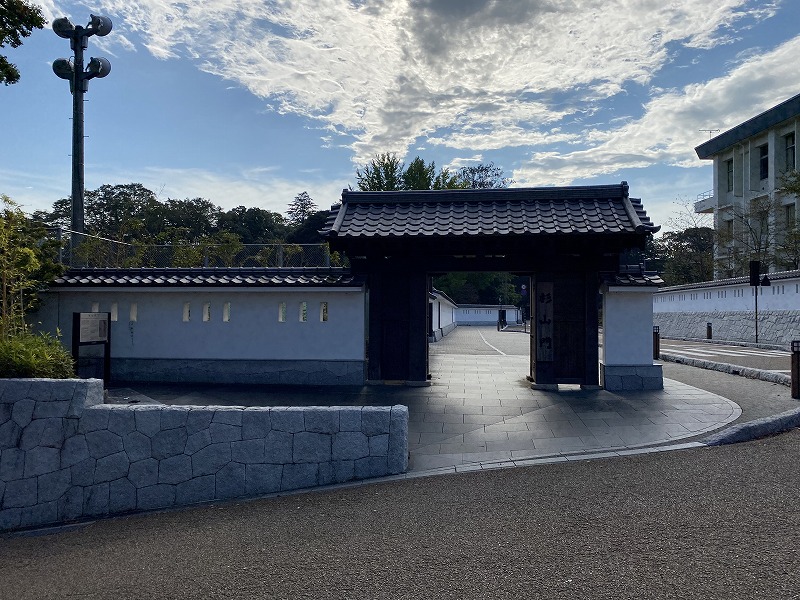
This is the Sugiyama Gate, a beautiful Korean-style gate located at the top of the Sugiyama slope at the north entrance of the Ninomaru.
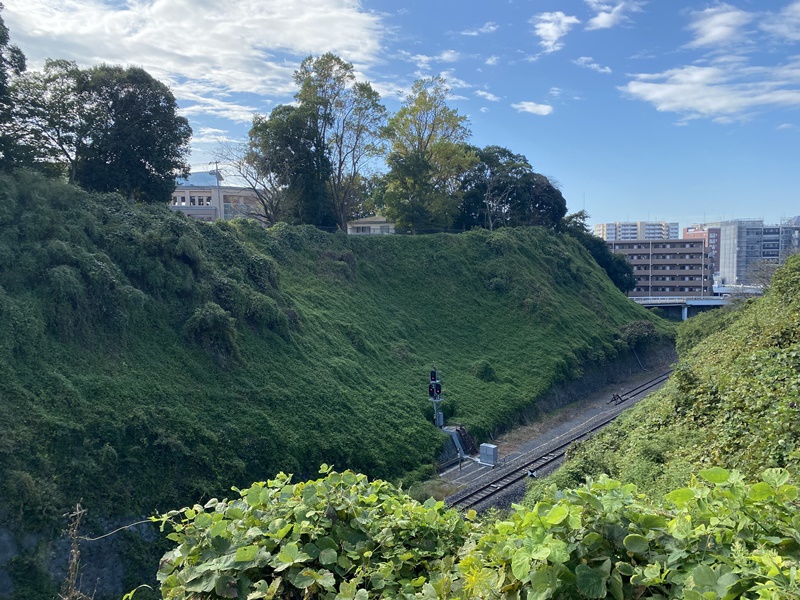
The Ohorikiri is a colossal dry moat visible from Honjo Bridge. Today, the JR Suigun train line runs right through the bottom. Looking down from the bridge, you can't help but be amazed by its massive scale.
According to old maps, this used to be a water moat, making it incredibly difficult for enemies to cross. It’s a powerful reminder of how formidable the castle’s defenses were.
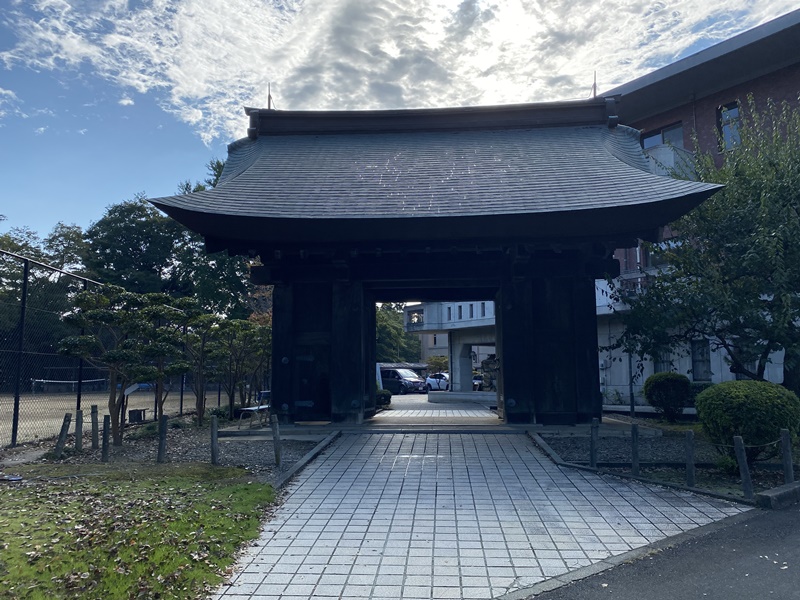
This is the Yakui Gate. Located in the Honmaru area—which is now the campus of Mito First High School—it is the only surviving original structure from the old castle.
Mito Castle boasts a long history dating back to 1193, during the era of Minamoto no Yoritomo. By the Edo period, it had earned immense prestige alongside Nagoya and Wakayama as one of the three noble Tokugawa branches.
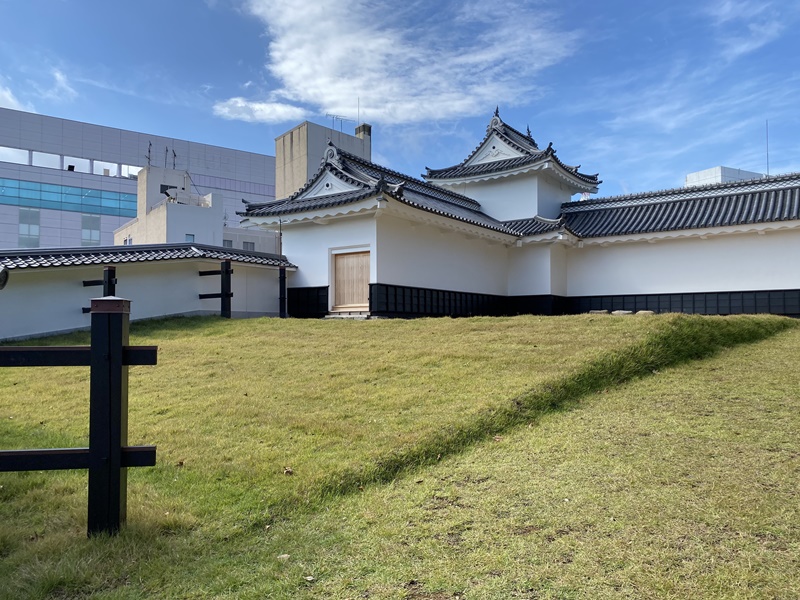
The Ninomaru Corner Turret (Yagura) is a reconstructed two-story wooden watchtower at the southwest corner of the Ninomaru. Entrance is also free.
Inside, the space is beautifully finished with the scent of fresh wood, displaying materials about the castle. A highlight is the restored demon roof tile bearing the Tokugawa family crest (Mitsuba Aoi), faithfully recreated from nearly perfect excavated pieces.
From the warrior windows (Musha-mado) of the turret, you get a commanding view of the Mito cityscape.
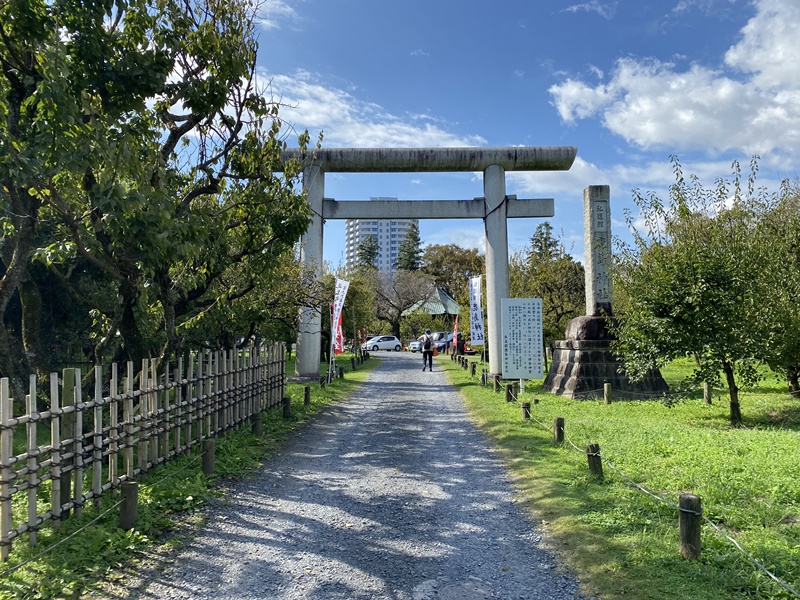
Now in the Sannomaru area, this is the entrance to Kashima Shrine, dedicated to the martial deity Takemikazuchi-no-mikoto.
It is said to grant a wide variety of blessings, including family safety, traffic safety, success in martial arts and sports competitions, business prosperity, health, longevity, academic success, and good matchmaking!
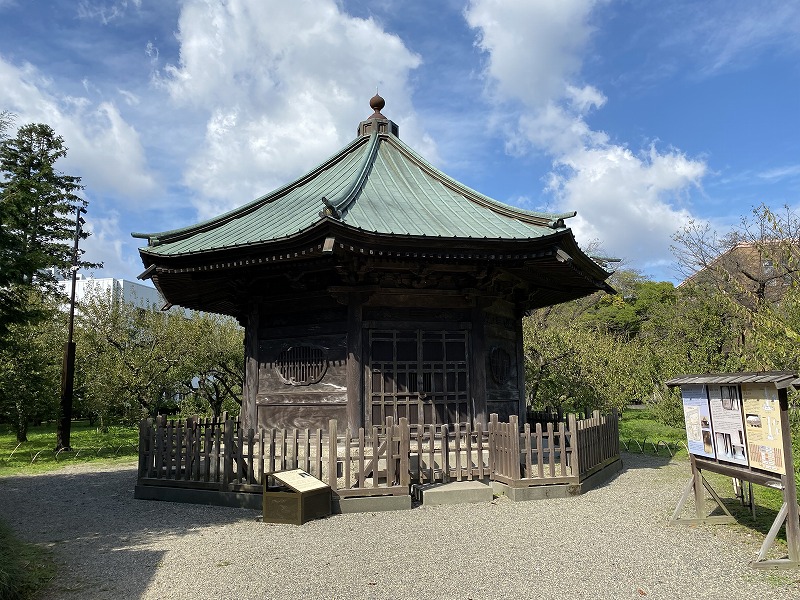
This is the Hakkedo (Octagonal Hall), which houses the Kodokan Memorial Monument. The eight-sided structure symbolizes the cosmic laws of change, reflecting Lord Nariaki's profound view of the universe.
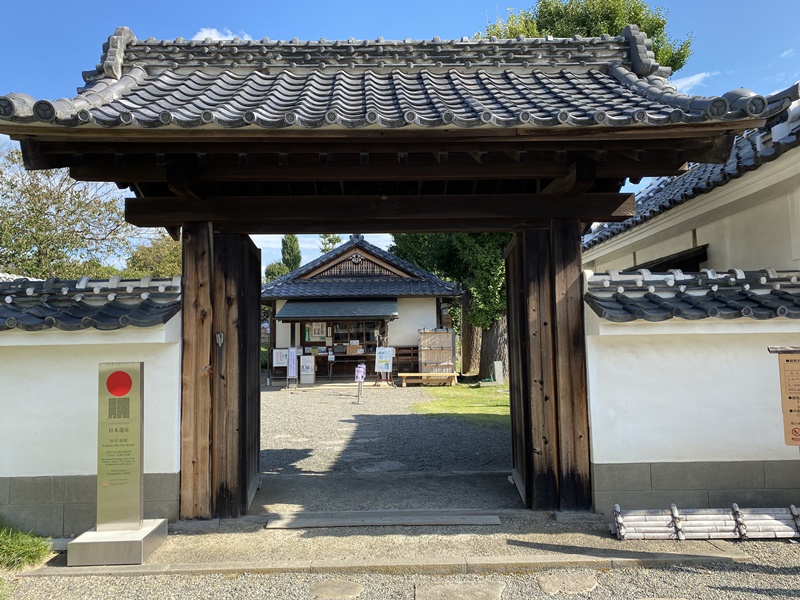
The entrance to the Kodokan, also in Sannomaru. It was one of Japan's largest domain schools, renowned as a premier academy of learning.
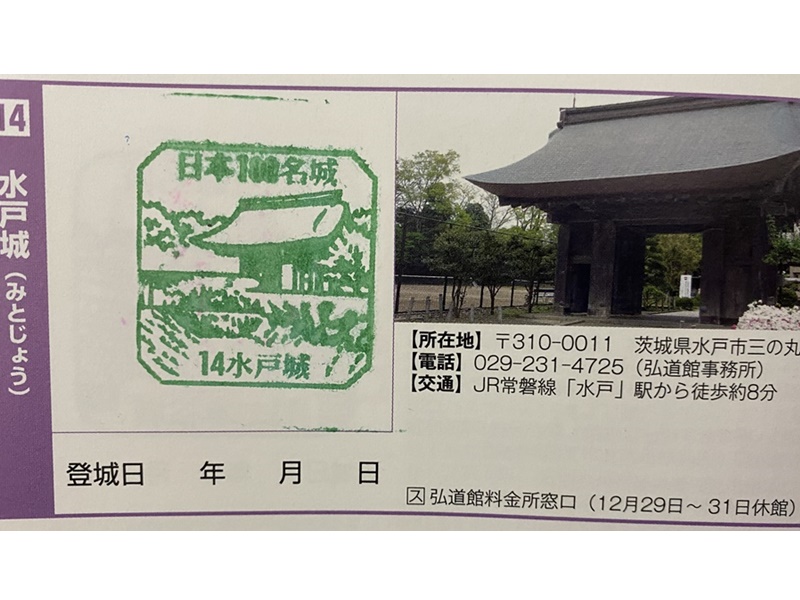
Admission is required (400 yen for adults as of 2024). Note for collectors: The Top 100 Castles stamp is kept right here at the ticket booth, so don't forget to get yours!
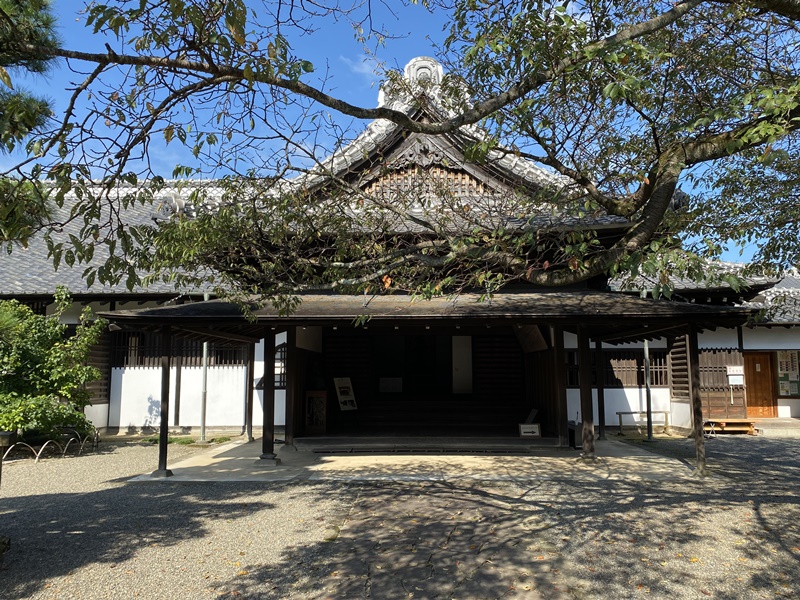
The Kodokan itself. Founded by Tokugawa Nariaki, this magnificent school covered an expansive 10.5 hectares, making it the largest of its kind in Japan. It is now designated as a Special Historic Site.
Interestingly, the grounds included a martial arts testing area where you can imagine the intense sword training often seen in historical dramas. The main hall displays a wooden plaque brushed by Lord Nariaki himself, reading "Yu-o-gei" (Find joy in arts and learning).
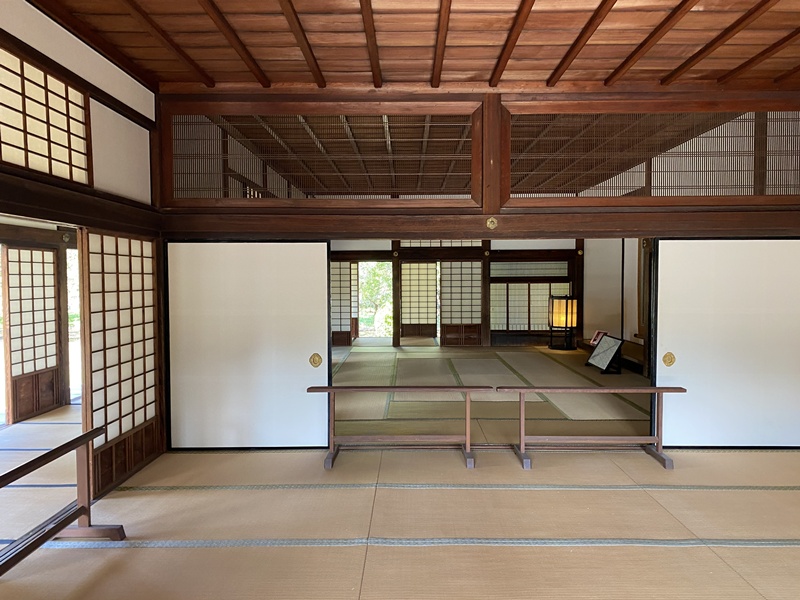
Inside the Kodokan. The interior is meticulously maintained, preserving its original atmosphere. It feels as grand as a nobleman's palace.
The tatami rooms strongly evoke the spirit of a traditional school. It reminded me of my visit to the Ashikaga School. To think that so many people studied diligently here for the future of Japan is truly inspiring.
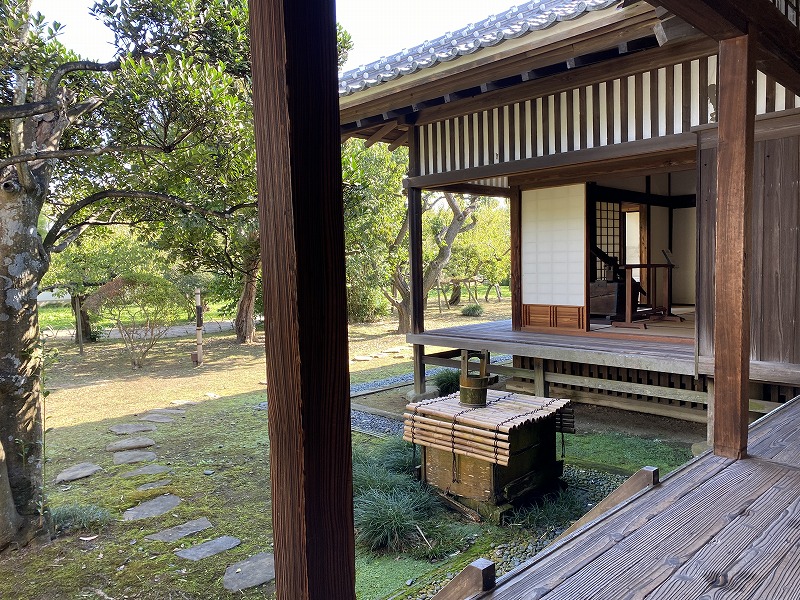
The garden view from the wooden veranda (Engawa). Rather than being extravagantly gorgeous, it has a stoic, clean, and disciplined beauty that is perfectly maintained.
Sitting on the veranda and gazing at the garden brought a deep sense of peace. It must have been the perfect spot for students to take a breather between their intense studies.
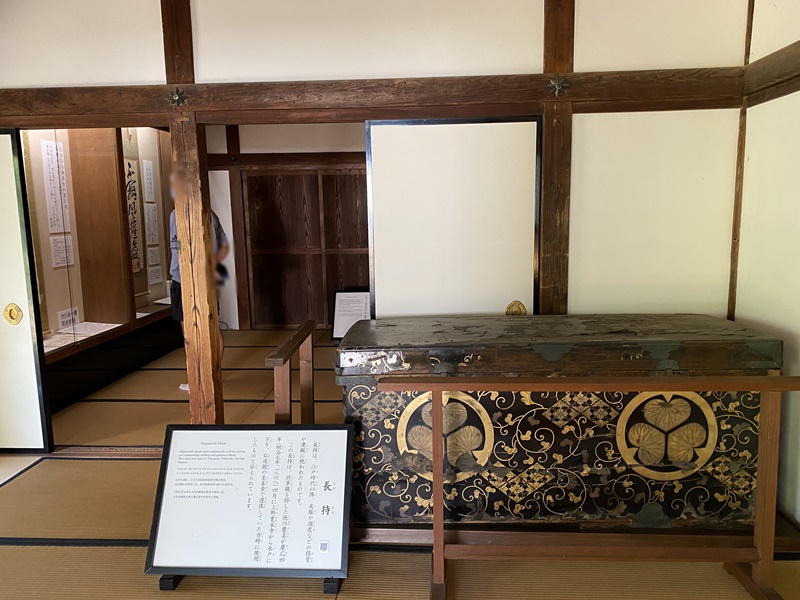
This is a Nagamochi (a traditional long wooden chest used for storing and transporting goods in the Edo period), with a hanging scroll in the back.
This particular chest is said to have been used by Tokugawa Yoshinobu (the last Shogun of Japan)! Knowing that makes it feel incredibly special. The large Tokugawa crest painted on it gives it a bold and majestic presence.
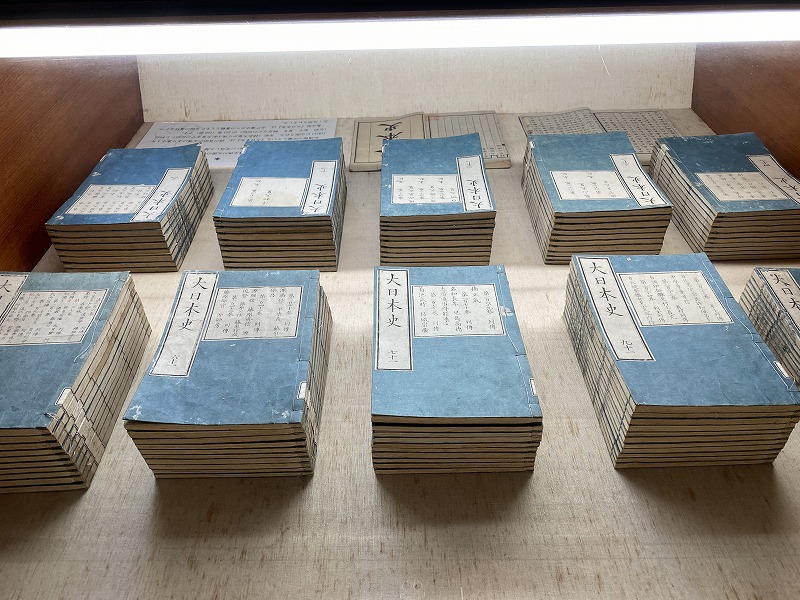
The monumental Dai Nihon-shi (Great History of Japan). Commissioned by Mito Komon, it is a comprehensive history of the nation written in a biographical style.
It took about 250 years to complete! The project put such a heavy strain on the domain's finances that there were even protests, but the Mito clan persevered to leave behind this invaluable historical record.
The "Path of Mito Learning" in the Ninomaru area was lined with beautiful white walls. True to its name, there are many elementary, middle, and high schools lined up there today. It really feels like it has always been, and still is, a true place of learning!
Exploring the Surrounding Area
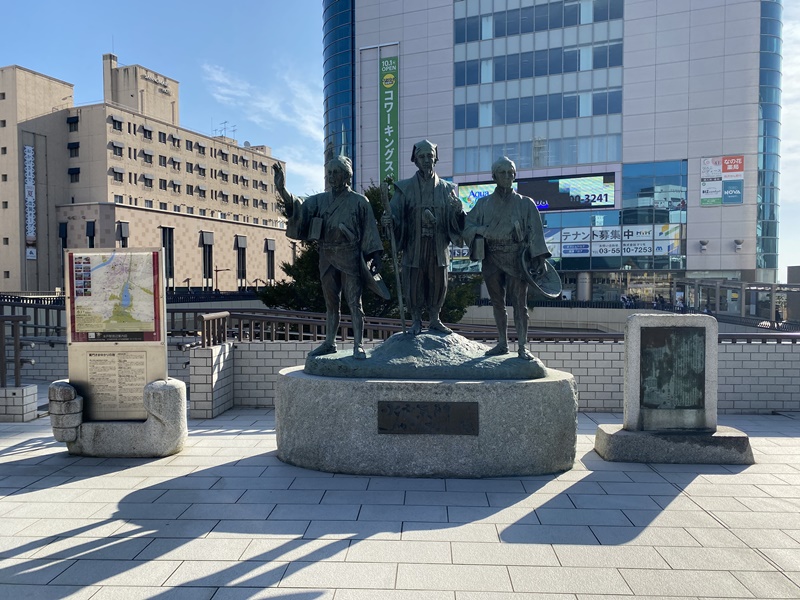
Here is the bronze statue of Lord Tokugawa Mitsukuni standing proudly in front of Mito Station. When you think of Mito, the legendary "Mito Komon" is undoubtedly the first name that comes to mind in Japan.
His loyal companions, Kaku-san and Suke-san, are also immortalized in bronze right beside him!
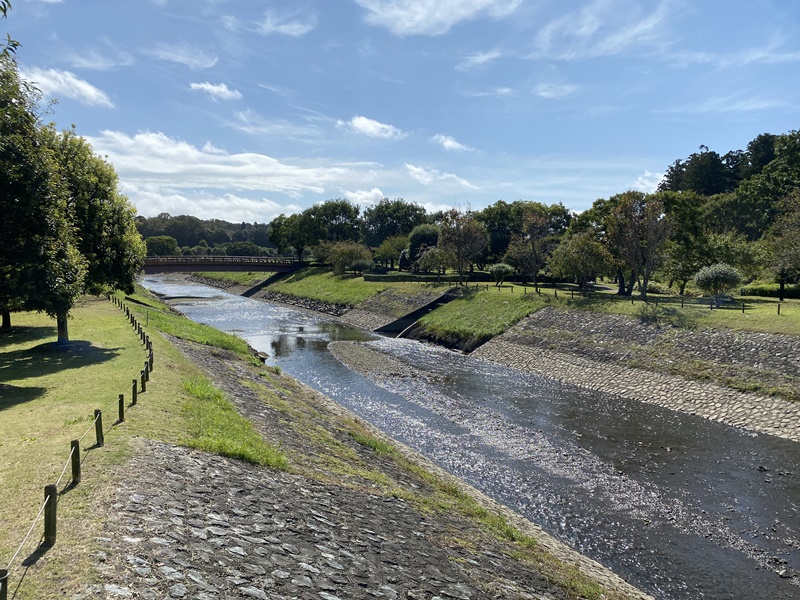
This is Senba Park. It is wonderfully spacious and incredibly popular for a leisurely stroll. The sun was shining perfectly on the day of my visit, making for a truly refreshing walk. Right next to it lies Lake Senba, a gourd-shaped lake with a 3-kilometer circumference offering beautiful waterfront views. You can even rent boats or bicycles to explore the area.
Nearby is Kairakuen, renowned as one of Japan's Three Great Landscape Gardens. It is absolutely breathtaking during the plum blossom season, attracting visitors from all over the country. Just a short walk from Kairakuen is the Tokugawa Museum, which houses an astounding collection of approximately 60,000 artifacts, including artworks, crafts, and ancient documents related to the Mito Tokugawa family.
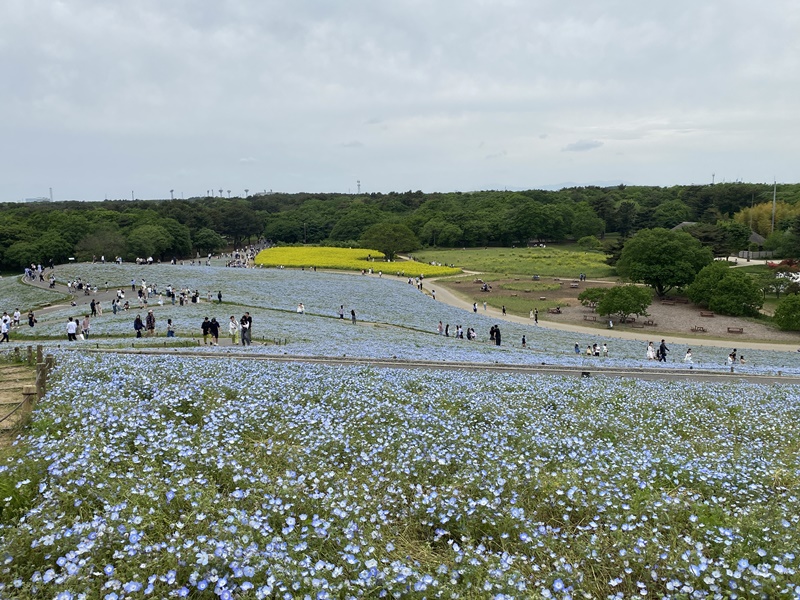
Next is Hitachi Seaside Park. This sprawling park allows you to enjoy seasonal flowers year-round, but it is especially famous worldwide for its spring Nemophila (baby blue eyes).
On the day I visited, the Nemophila were in full bloom, just like in the picture. Seeing this breathtaking "blue carpet" stretching across the hills was an unforgettable experience.
By the way, the park is overwhelmingly vast. If you want to explore it thoroughly, renting a bicycle is highly recommended! Even on a rented bike, I was amazed by the sheer scale of the grounds.
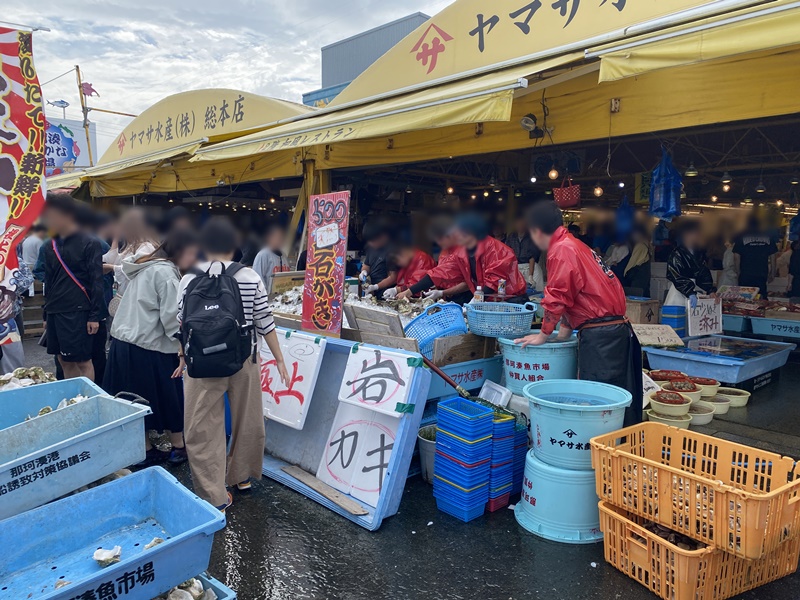
Welcome to the Nakaminato Fish Market! It is the largest seafood market in the northern Kanto region, offering everything from delicious street food to fresh seafood souvenirs.
Its most famous attraction is the fresh, raw oysters, which vendors shuck right in front of you for an immediate tasting. You've probably seen them trending on social media! I tried a giant rock oyster myself—it was incredibly plump, meaty, and wonderfully creamy. I also bought some sashimi, fresh fish, and whitebait (shirasu) to take home for a seafood feast later.
| Item | Details |
|---|---|
| Name | Nakaminato Fish Market |
| Location | 19-8 Minatohoncho, Hitachinaka City, Ibaraki |
| Access | Approx. 30 mins by car from Mito Castle / 15 mins from Hitachinaka IC |
| Highlights | A massive market filled with fresh seafood. Packed with dining spots, fish vendors, and souvenir shops. |
| Dining Experience | Enjoy fresh oysters shucked on the spot, street food, Kaisendon (seafood bowls), sushi, and "Hamayaki" (freshly grilled seafood). |
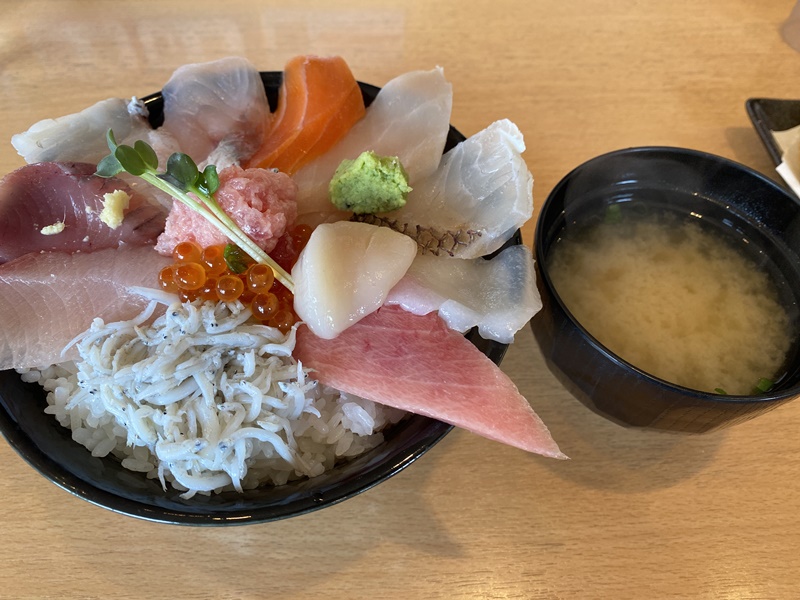
Here is the spectacular Kaisendon (seafood bowl) I had at the market. There are several restaurants inside, but since it was lunchtime, they all had lines out the door.
I decided to eat at a restaurant called "Kaimon" and ordered their famous "Makanai-don." It was well worth the wait! The bowl was piled high with incredibly fresh seafood—I was completely satisfied with every bite.

I ate fresh raw oysters and a massive seafood bowl at the market, and even bought lots of seafood souvenirs like sashimi and shirasu to take home! I am completely satisfied and full! ☆
Castle Stamp & Access Guide
| Item | Details |
|---|---|
| Location | Kodokan Ticket Office (Inside the former Mito domain school) |
| Hours | Feb 20 – Sep 30: 9:00 AM – 5:00 PM Oct 1 – Feb 19: 9:00 AM – 4:30 PM |
| Closed | Year-end holidays (Dec 29 – Dec 31) |
| Phone | 029-231-4725 |
| Fee | Admission: Adults 420 yen / Students 210 yen / Seniors (70+) 210 yen |
| Note | The stamp is only available at this location. |
| Item | Details |
|---|---|
| Address | Around 1-2 Sannomaru, Mito City, Ibaraki (Kodokan / Mito Castle Ruins) |
| Access (Train) | 8–15 minute walk from the North Exit of JR Mito Station |
| Access (Bus) | From Mito Station North Exit, take a bus bound for "Daikumachi" → Get off at "Kodokan-mae" |
| Parking | Free parking is available at the Kodokan. Nearby paid coin parking lots are also available. |
| Phone | 029-231-4725 (Kodokan Office) |
| Time Needed | Approx. 30–45 mins. Allow about 1 hour if you want to take your time exploring the moats and earthen walls. |

Since Mito Castle is located on relatively flat ground, you don't need any special hiking gear. However, the grounds are quite expansive, so I highly recommend wearing comfortable walking shoes or sneakers!
Summary
Although Mito Castle was the proud residence of one of the three noble Tokugawa branches, it was surprisingly simple and never featured a grand main tower (Tenshu). This modesty was partly out of respect for the Shogun, and because the lords of Mito held a special duty called "Jofu"—requiring them to live permanently in Edo (Tokyo) rather than in their own domain.
Despite its simplicity, Mito Castle was undeniably the symbol of the city until it was tragically lost to war. Today, it remains deeply cherished by the locals, celebrated year after year with vibrant events like the Mito Komon Festival.
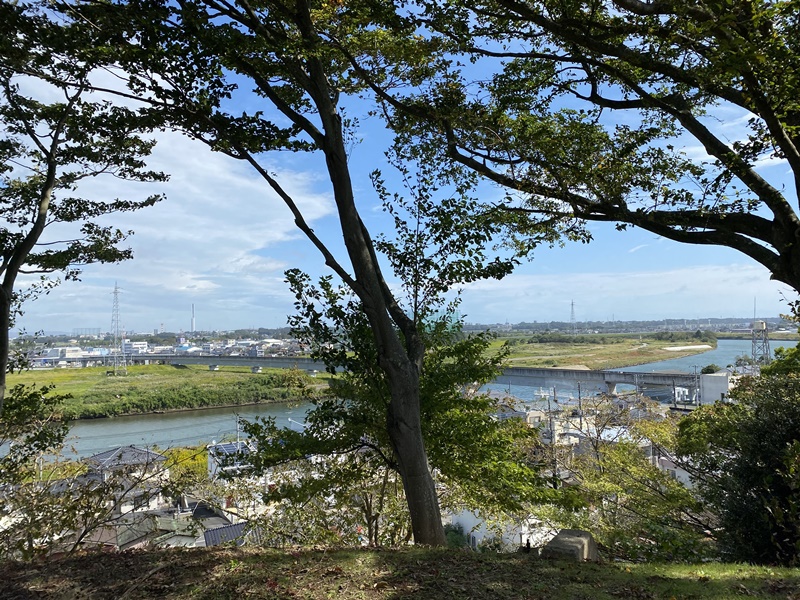
The image above is the view from the observation deck near the Second Junior High School. From here, you can gaze down at the majestic Naka River flowing below—a truly spectacular view from the castle grounds.
Also, the surviving Kodokan is an absolute must-see. This prestigious academy beautifully preserves its original appearance. Amazingly, even though it was an elite institution where students learned various subjects from around 100 teachers, tuition for its 1,000 students was completely free! It's incredible to think that Tokugawa Yoshinobu, the last Shogun of Japan, was educated right here.
The area surrounding Mito Castle is packed with attractions. You can enjoy the freshest seafood at Nakaminato Fish Market, and take in the stunning natural beauty of Kairakuen Garden and Hitachi Seaside Park. It’s a fantastic destination where history, nature, and gourmet food all come together perfectly. If you have the chance, definitely explore these surrounding spots as well!
Did you know that "Komon" is actually an official title? It comes from the Chinese name for a high-ranking government post (Chunagon). That means there might have been quite a few "Mito Komons" throughout history! ♪
That makes sense! But still, when we say "Mito Komon," everyone immediately pictures the great Lord Mitsukuni holding his famous seal case!
Interestingly, Lord Mitsukuni didn't actually travel the country himself. He sent his retainers all over Japan to gather information for the "Dai Nihon-shi" history book, and somehow over time, that turned into the legend of his grand travels!
Speaking of Lord Mitsukuni, he was incredibly curious and a massive foodie! It’s said he was the very first person in Japan to eat ramen, gyoza, and black soybean Natto. Oh, and I secretly bought some famous Mito Natto to take home! ☆
Momiji, you’re always talking about food! (laughs) By the way, the castles near Mito on the list are No. 13 Shirakawa Komine Castle and No. 15 Ashikaga Residence (Bannaji). If you have the time, please pay them a visit! ♪
▼ Explore Castles in Kanto & Koshinetsu
Kanto Area
14. Mito Castle /
15. Ashikaga Residence /
16. Minowa Castle /
17. Kanayama Castle /
18. Hachigata Castle /
19. Kawagoe Castle /
20. Sakura Castle /
21. Edo Castle /
22. Hachioji Castle /
23. Odawara Castle /
Koshinetsu Area
24. Takeda Residence /
25. Kofu Castle /
26. Matsushiro Castle /
27. Ueda Castle /
28. Komoro Castle /
29. Matsumoto Castle /
30. Takato Castle /
31. Shibata Castle /
32. Kasugayama Castle

